Stop Walking Past the Gap: A Measure-First Guide to Slim Storage Cabinets
Every home has one. A strip of floor too narrow for any furniture that exists, so it becomes the place where the broom leans, where the extra toilet paper stacks, where the mop bucket lives. Beside the fridge. Between the vanity and the wall. Next to the washing machine.
You have walked past it so many times that it no longer registers as wasted space. It is just part of the house — like the sound the screen door makes.
Here is the reframe: that strip is not too narrow for storage. It is too narrow for ordinary storage. The category you need is a slim cabinet, and the only real decision is measuring the gap and matching the width. That is the whole process, and it takes five minutes.
Why Nothing You Already Own Fits There
Standard furniture starts at about twelve inches deep and wide, because that is what fits dishwashers, nightstands, and shelving units. A nine-inch gap is invisible to the entire furniture industry.
So the strip loses by default. It cannot hold a shelf, so it holds whatever can physically stand in nine inches: a bottle, a plunger, a tower of paper towel rolls that slowly leans. The space is not being used — it is being occupied.
And the cost is bigger than the strip itself. Everything that should live there is instead living on your counter, on the washer lid, or in a pile on the floor. The clutter in your bathroom did not come from nowhere; it came from the fact that its home was a strip of floor nobody could furnish.
Step One: Take the Tape Measure to Your House
Before looking at any product, walk your home with a tape measure and find the gaps. You are looking for vertical strips of floor between roughly seven and ten inches wide.
The four places that pay off most often:
The bathroom, beside the vanity or toilet. The classic spot. That strip is usually eight to ten inches and currently stores nothing you would defend in public.
The kitchen, beside the refrigerator. Fridge gaps are dusty, deep, and wasted. The one next to mine collected dust bunnies for two years while my pantry overflowed.
The laundry room, beside the washer. Detergent refills and cleaning supplies end up in a pile somewhere. The gap beside the machine is exactly the right size for them.
The bedroom or hallway. The strip between a dresser and the wall, or beside a bookcase. Less obvious, but the same rule applies.
Measure the width at the narrowest point — baseboards and door trim can steal half an inch without you noticing. Write the number down. That number decides everything that follows.
Step Two: Match the Width to the Gap
Slim storage cabinets come in widths, and picking the wrong one turns your five-minute project into a return shipment. There are two widths worth knowing.
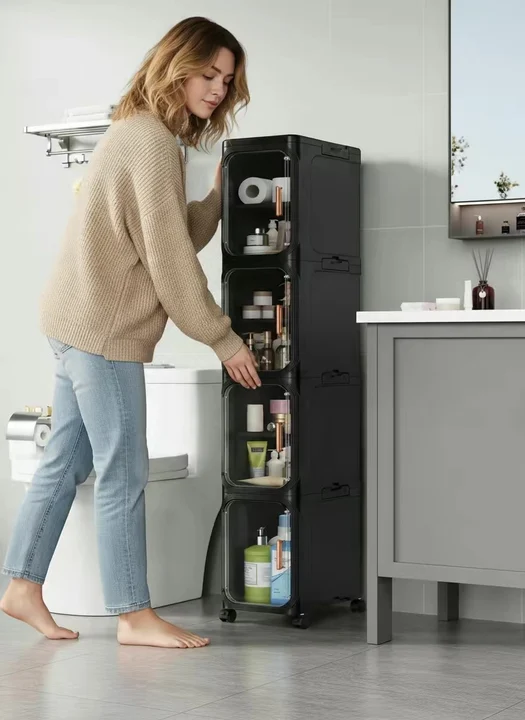
The N9 runs about 7.87 inches wide. It is the one for genuinely tight gaps — the strip beside the toilet, the sliver next to the washer, the gap between vanity and wall that you were sure nothing would ever fit. It holds tissues and paper backups, skincare and daily toiletries, cleaning sprays, and the small bottles that currently migrate across your counter.
The N8 runs about 9.6 inches wide and adds adjustable shelves. Those extra inches and movable shelves are what tall bottles need — laundry detergent, shampoo refills, stain remover. If your gap is closer to ten inches, or your problem is tall bottles and folded towels, the N8 is the better tool.
The rule is simple: the cabinet should be slightly narrower than the gap, not the other way around. A cabinet that has to be wedged in cannot roll out, and a cabinet that cannot roll out becomes permanent furniture again — which defeats the point.
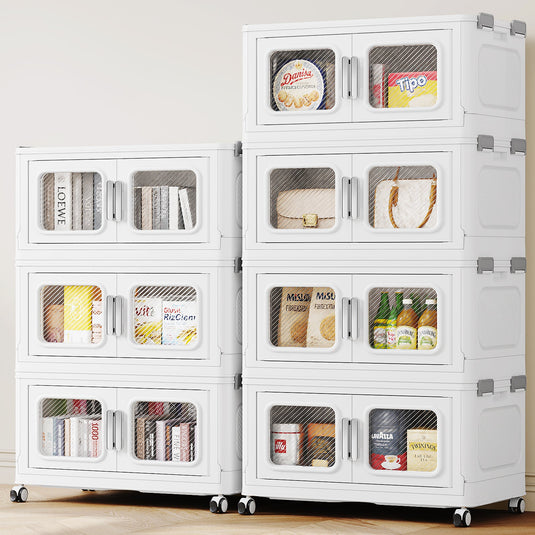
One note on honesty, because slim products get photographed at flattering angles: what you are buying is narrow storage for small daily items. It is not bulk storage, and the listing photos should match that expectation. Measure your gap, compare it to the listed width, and buy for the space you actually have.
What Goes In: One Category Per Level
A slim cabinet fills top to bottom, and the fastest way to organize it is one category per level.
In a bathroom: daily skincare up top where your hands go first, bathroom backups in the middle, cleaning sprays at the bottom. In a kitchen: cooking oil and spices at eye level, snacks and cans below. In a laundry room: detergent refills, stain remover, dryer sheets, folded cleaning cloths — one group per shelf, and the pile that lived beside the washer is gone.
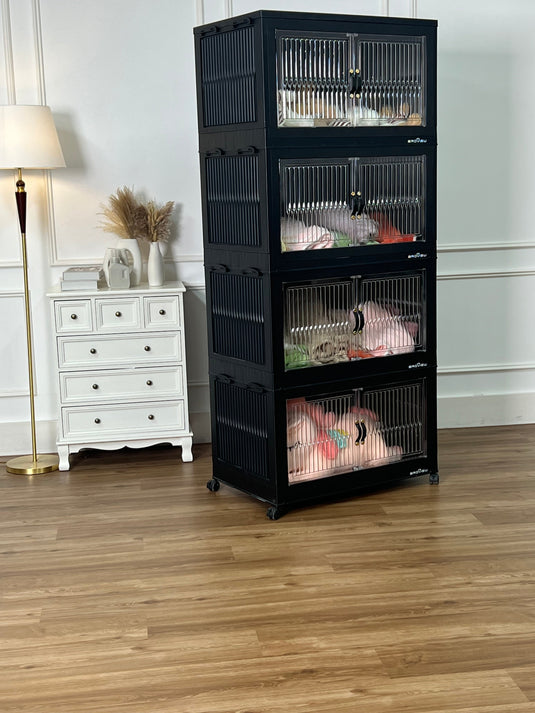
The clear doors are what keep the system working. You can identify the category before you open anything, so restocking the toilet paper does not turn into opening every door to find it. The texture on the panels keeps the contents looking calm from across the room — you see categories, not a wall of bottles.
The Details That Make a Slim Cabinet Actually Usable
Narrow storage lives or dies on a few small features, because a bad one becomes a thing you have to work around.
It rolls out. The wheels let you pull the whole cabinet forward to clean the strip behind it, or reach something that fell into the gap. Parked, it stays put. This is the difference between using the gap and sealing it.
The doors close magnetically. No latches to catch, and no open door swinging into the walkway of a space that was already tight. The magnetic close is also quietly satisfying in a way that matters when you use something daily.
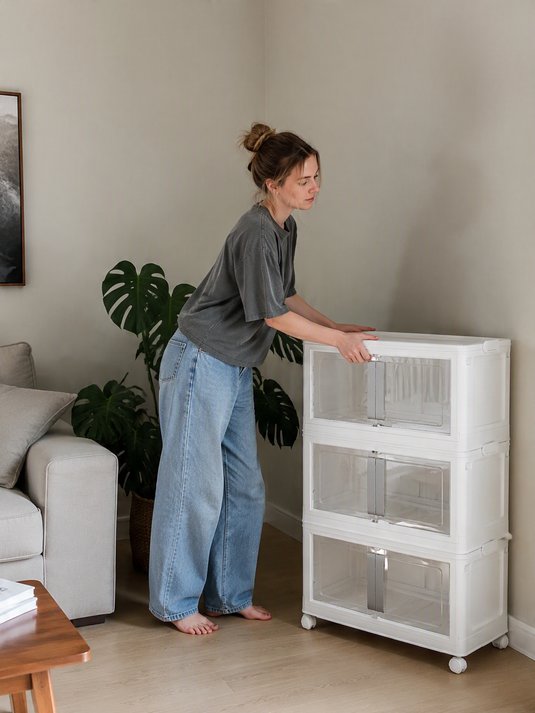
It goes up by hand and folds back down. The frame unfolds, the sides click in, and it is ready to load — no tools. When you move, it folds flat and comes with you instead of being abandoned beside the washer.
It is vertical. A slim cabinet thinks in height, not floor area. Four levels of storage in under ten inches of width is roughly the capacity of a small bookcase, in a spot where a bookcase could never stand.
Who Gets the Most Out of One
Renters. You cannot add built-ins to a rental, and you should not buy furniture you will leave behind. A slim cabinet rolls into the gap, does its job for the length of the lease, folds flat, and moves out with you. Nothing gets mounted, and the room works better the whole time you are there.
Small-bathroom households. When the bathroom is tight, the counter becomes the storage, and the counter is the worst storage in the house — everything on it collects dust and looks like mess. Moving backups and cleaning supplies into the strip beside the vanity gives the counter back to the things you actually use daily.
Laundry and kitchen overflow people. If the pantry is full and the washer lid is a shelf, the gaps beside those appliances are the closest unused real estate to the problem. Restock categories go there, close to where they get used.
How the Alternatives Compare
You have probably tried the other options, so it is worth being clear about why they lose in a tight gap.
A rolling cart fits narrow spaces, but open carts collect visual clutter and their contents tip in transit, so they end up holding what you do not mind looking at — which is never the bathroom backups. A shelf unit needs a footprint wider than most gaps, and anything on open shelves in a bathroom or laundry corner gets dusty. Built-ins solve the problem permanently and expensively, and renters cannot have them at all.
A slim cabinet takes the part that works — vertical storage in a tight footprint — and adds covered doors, so the contents stay contained instead of becoming part of the room's visual noise. It is the only one of the four options designed for the gap as it actually exists.
What It Is Not For
Being honest about the limits is what keeps this a good purchase instead of a returned one.
It is not a seat, and it will not hold giant comforters or bulk warehouse runs — that is a job for full-depth storage. It is indoor storage for dry rooms, not a sealed outdoor box. Tall bottles should be checked against the shelf height before you commit, which is exactly why the adjustable shelves on the wider model exist. And if the gap is under seven inches, no cabinet will help — that is a picture ledge, not a storage problem.
Frequently Asked Questions
How narrow does my gap need to be for a slim cabinet to work?
Measure it. A gap of roughly eight inches suits the slimmest model at about 7.87 inches wide, and a gap closer to ten inches suits the wider model at about 9.6 inches. The cabinet should slide in with a little room to spare so the wheels can still roll it out.
What is the difference between the N8 and N9?
Width and shelves. The N9 is about 7.87 inches wide and made for genuinely tight strips beside a toilet, vanity, or washer. The N8 is about 9.6 inches wide with adjustable shelves, which is what tall detergent and shampoo bottles need. Match the width to the gap you measured.
What should I store in it?
Small daily items, one category per level: paper backups, toiletries and skincare, cleaning sprays, detergent refills, snack and can overflow, pet supplies. If an item is taller than the shelf clearance, check it against the adjustable-shelf model instead.
Can I see what is inside without opening it?
You can identify the category, not every item. The doors are clear panels with a light texture, so a stack of paper goods reads differently from a row of bottles — which is enough to go straight to the right level.
Can it roll out for cleaning?
Yes. It sits on wheels, so you can pull the whole cabinet forward to clean the strip behind it or retrieve something that fell into the gap, then roll it back into place.
Does it need tools or mounting?
It unfolds and clicks together by hand, and nothing gets attached to the wall. It also folds back down flat, which is what makes it practical for rentals and moves.
Will it fit beside my fridge?
Measure the gap first, including any baseboard or trim at the narrowest point. Fridge gaps are one of the best spots for it — deep, vertical, and usually dead space — as long as the width matches.
Is it sturdy enough for detergent bottles?
The wider model with adjustable shelves is designed around tall bottles like detergent and shampoo refills. Place the heaviest bottles on a lower level, and keep oversized bulk containers for full-depth storage.