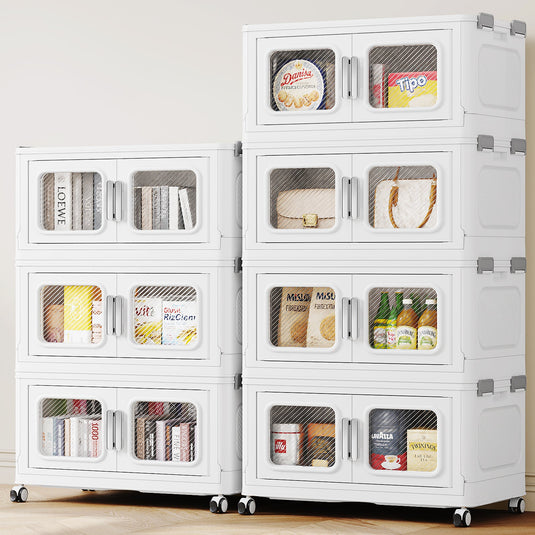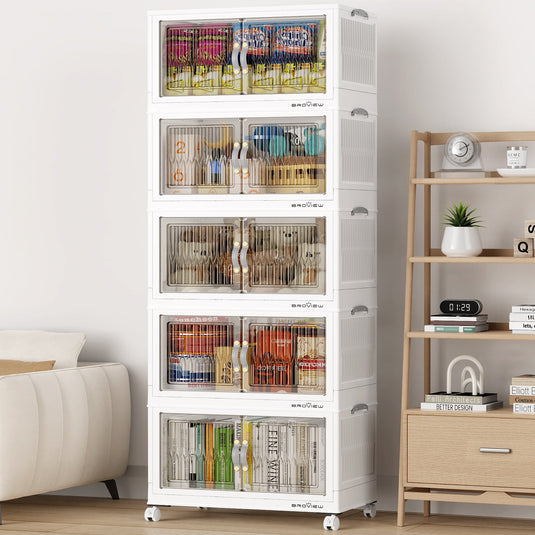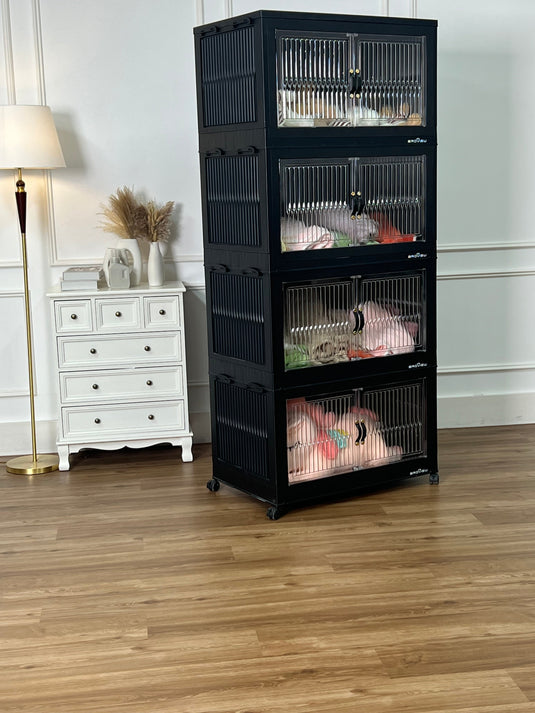
If you have ever bought storage bins that looked stackable online but wobbled the moment you loaded them, you are not alone. The best stackable storage bins are not just containers with lids; they are storage solutions with the right footprint, lid design, wall strength, access style, and size system for the space you are organizing. This guide explains what makes stackable storage bins that actually stack—how to choose the right one for closets, garages, pantries, playrooms, craft rooms, and everyday home storage.
What makes a storage bin truly stackable?
A truly stackable storage bin stays aligned, stable, and usable when one filled bin sits on top of another. That usually comes from a flat or recessed lid, a base that nests securely into the lid below it, rigid sidewalls, and a shape that distributes weight instead of bowing at the center.
Many storage bins are technically “stackable” only when they are empty or lightly filled. The difference shows up once you add books, tools, seasonal décor, pantry overflow, toys, linens, or sports gear. A bin that works well should stack without sliding, flexing dramatically, crushing the lid beneath it, or making the contents impossible to access.
The most reliable designs share a few traits:
-
A recessed lid or rim: The bottom of the upper bin sits into a shallow track, reducing side-to-side movement.
-
Straight, structured sides: Rigid walls help the bin hold its shape under load.
-
A matching product line: Bins from the same series usually stack more predictably than mixed brands and sizes.
-
Secure lid contact: The lid should fit tightly enough to support stacking, not just cover the contents.
-
Practical proportions: A bin that is too tall and narrow may tip; one that is too wide with a weak lid may sag.
Broview, for example, describes some latching boxes with a recessed lid design made to help bins stack neatly and use vertical space more efficiently. IKEA’s SAMLA system is another example of a line designed around clear boxes and compatible lids, with the lid helping protect contents and support stacking. (broview.net)

Start with the space, not the bin
The easiest mistake is buying a large pack of bins before measuring the place where they will live. Good organization starts with the storage zone: a closet shelf, garage rack, pantry cabinet, under-bed area, laundry room, basement wall, or office cabinet. The right bin is the one that fits the space with room to lift, slide, label, and reach.
Measure three things before you shop: width, depth, and height. Then subtract a little breathing room. If a shelf is 16 inches deep, a 16-inch-deep bin may technically fit but still scrape, jam, or force you to turn it sideways. If a shelf opening is 12 inches tall, stacking two 6-inch bins may not work once you account for lid rims and the hand space needed to pull them out.
Think about the way your body interacts with the storage. A bin on a low shelf can be deeper and heavier because you can pull it out safely. A bin stacked above shoulder height should be lighter, smaller, and easier to grip. Heavy items belong lower, while bulky but light items can go higher.
For better planning, divide your space into zones:
-
Daily-use zones: Choose open-front, clear, or shallow bins so you can grab things quickly.
-
Occasional-use zones: Lidded stackable storage bins work well for seasonal clothes, holiday décor, guest linens, or extra supplies.
-
Deep-storage zones: Use durable bins with secure lids for garages, basements, attics, and long-term storage.
-
Display-adjacent zones: In visible areas, choose matching bins in neutral colors or clear finishes so the system looks intentional.
A bin can be well made and still be wrong for your space. The goal is not to buy the largest container. The goal is to create a stack you can actually maintain.
Choose the right bin type for the job
Not all stackable storage bins solve the same problem. Some are built for visibility, some for protection, some for speed, and some for heavy-duty storage. Matching the style to the use case is the fastest way to avoid frustration.
Clear lidded bins
Clear lidded bins are ideal when you want to see what is inside without opening every container. They work well for craft supplies, kids’ toys, seasonal accessories, extra toiletries, pantry overflow, and office items. They are especially helpful when multiple people in the household need to find things.
The tradeoff is appearance. Clear bins can look busy if the contents are colorful or mismatched. In a garage or closet, that may not matter. In a living area, you may prefer opaque bins with labels.
Opaque lidded bins
Opaque bins hide clutter and create a cleaner visual line. They are good for closets, bedrooms, mudrooms, and shelves where the bins are visible. If you choose opaque bins, labeling becomes more important because you cannot rely on visibility.
These bins are also useful for items that do not need constant access. Think spare cables, keepsakes, seasonal linens, pet supplies, or backup household goods. Choose a consistent color if you want the storage to feel calmer.
Latching bins
Latching bins have clips or handles that help hold the lid in place. They are useful when bins are moved often or when the lid needs to stay attached more securely. Broview’s product information notes that some latching designs allow one latch to remain attached like a hinge, which can make access easier during quick organizing sessions. (broview.net)
A latch does not automatically mean the bin is heavy-duty or airtight. It simply means the lid is less likely to pop off during normal handling. For garages, moving, kids’ rooms, or stacked closet storage, latches are often worth choosing.
Open-front bins
Open-front bins are best for items you grab frequently: snacks, cleaning cloths, hats, gloves, small toys, craft materials, and office supplies. They can stack while still allowing front access, which is helpful on shelves where removing the top bin every time would be annoying.
The downside is dust protection. Open-front bins are not ideal for long-term storage or delicate items. Use them where convenience matters more than full enclosure.
Heavy-duty totes
Heavy-duty totes are meant for bulkier, heavier, or less delicate storage. They usually have thicker plastic, stronger lids, and more rugged handles. They are good storage solutions for garages, utility rooms, camping gear, tools, seasonal decorations, and basement shelves.
The main risk is overbuying size. A huge tote filled with heavy objects becomes difficult to lift and can stress the bin below it. For dense items, smaller heavy-duty bins are usually more practical than one oversized container.
Match size to contents, not wishes
A bin should fit what you actually store, not the fantasy version of a perfectly minimal home. Before buying, gather the items you want to contain and group them by category. This gives you a realistic sense of volume and prevents the common problem of half-empty bins stacked next to overflowing ones.
For small items, shallow bins are often better than deep bins. They prevent things from disappearing at the bottom and make it easier to sort by category. For bulky items, larger bins can work, but only if the contents are light enough to lift safely.
Use these practical pairings as a starting point:
-
Small bins: Batteries, chargers, craft tools, office supplies, first-aid extras, makeup backups, sewing notions.
-
Medium bins: Kids’ toys, folded clothes, holiday linens, cleaning refills, pet supplies, pantry overflow.
-
Large bins: Seasonal décor, blankets, sports gear, camping items, bulky costumes, lightweight outdoor accessories.
-
Shallow bins: Under-bed storage, documents, shoes, gift wrap accessories, art paper, small collections.
-
Tall bins: Wrapping paper rolls, sports equipment, umbrellas, or long items that do not fit well in standard boxes.
If you are choosing among sizes in the same product line, try to keep the footprint consistent. Bins with the same width and depth stack more securely than a random mix. Different heights can work well as long as the bases and lids are compatible.
The lid determines whether the stack works
The lid is not an accessory; it is the platform for the next bin. A weak, domed, flexible, or poorly fitting lid is one of the biggest reasons storage bins fail in real life. Even a strong bin body will not stack well if the lid bends under weight or allows the top bin to slide.
Look for lids that feel firm when pressed at the center. The edges should sit evenly on the bin, and the top surface should have some kind of rim, groove, or recessed area where the upper bin can settle. If the lid flexes before the bin is loaded, it will likely flex more once the stack is full.
Avoid lids that only rest loosely on top if you plan to stack more than two bins. Loose lids can work for light closet storage, but they are not the best choice for garage shelves, kids’ rooms, or frequently moved bins. Latching lids are often better when you need the stack to survive regular handling.
A good lid should do three jobs:
-
Protect the contents from dust, splashes, and general household debris.
-
Create a stable stacking surface so the bin above does not shift easily.
-
Stay manageable so opening the bin does not feel like a wrestling match.
If you are shopping in person, test the lid. Put it on, press down lightly, lift the bin by its handles, and check whether the lid stays aligned. If you are shopping online, read product descriptions for terms such as recessed lid, indexed lid, latching lid, modular, stackable, or compatible lid.
Do stackable storage bins need to be airtight?
Most stackable storage bins do not need to be airtight unless you are protecting contents from moisture, pests, strong odors, or long-term environmental exposure. For everyday closets, toys, craft supplies, office goods, and seasonal clothing, a secure lidded bin is usually enough.
Airtight or gasket-seal bins are useful in more demanding situations. Consider them for basement storage, garage shelves, camping supplies, pet food, keepsakes, important papers, fabric in humid areas, or anything that could be damaged by damp air. They can also be useful when you are storing items for months without opening the bin.
However, airtight is not always better. Sealed bins can trap moisture if items are packed before they are fully dry. Clothing, linens, shoes, sports gear, and outdoor items should be clean and dry before being stored. If you seal damp fabric inside a container, the bin may protect it from outside moisture while still creating problems inside.
Choose based on risk:
-
Low risk: A standard lidded bin is fine for toys, office supplies, craft tools, and closet accessories.
-
Moderate risk: A latching lid is helpful for seasonal clothing, linens, pantry overflow, and bins that will be moved.
-
Higher risk: A gasket or more protective seal is better for garages, basements, camping gear, keepsakes, or humidity-prone spaces.
The best stackable storage bins are not always the most sealed. They are the ones that offer the right level of protection without making everyday access harder than necessary.
Materials matter more than they seem
Most household storage bins are plastic, but plastic quality varies widely. Some bins feel rigid and supportive; others become brittle, warp, or bow under weight. Material matters because stacking creates pressure points, especially at the lid edges and bottom corners.
For indoor closets and shelves, lightweight plastic may be enough. For garage or utility storage, choose thicker walls and stronger handles. If the bin will be moved often, pay attention to how the handles connect to the body. Thin handles can crack or flex when the bin is full.
Clear plastic is convenient but may show scuffs and visual clutter. Opaque plastic hides contents and can look cleaner, but it requires better labeling. Fabric bins may be attractive for shelves, but they usually do not stack as securely unless they have rigid frames and are used for lightweight items. Wire or metal bins can work for open storage, but they are not ideal for dust protection.
Ask yourself:
-
Will this bin sit untouched or be handled weekly?
-
Will it hold soft items or dense items?
-
Will it live in a climate-controlled space or a garage?
-
Will it need to protect items from dust, dampness, or pests?
-
Will children use it, and does it need to tolerate rough handling?
The more stress the bin will face, the more structure you need. A bargain bin can be perfectly fine for scarves or craft felt. It may be a poor choice for tools, books, canned goods, or heavy décor.
Access is just as important as stacking
A beautiful stack that you hate using is not a good storage system. Before choosing bins, imagine the moment you need something from the bottom container. Do you have to remove six bins first? Can you lift them safely? Will you actually put everything back?
For items used often, avoid tall stacks of fully lidded bins. Use shorter stacks, open-front bins, drawers, or shelf-level organization. For long-term items, taller stacks can work because you are not accessing them regularly.
A simple rule is to stack by frequency:
-
Top or front: Lightweight items used occasionally.
-
Middle: Medium-weight items used seasonally or monthly.
-
Bottom: Heavy items or bins accessed rarely.
-
Separate shelf: Anything used daily or weekly.
If you need both stacking and access, consider bins with hinged lids, split lids, front openings, or shallow profiles. Some latching box designs are made for easier one-handed access, while open-front bins keep frequently used items reachable without unstacking everything. (broview.net)
The right access style depends on your habits. If you are organizing a child’s playroom, open bins may beat lidded bins because cleanup is easier. If you are organizing holiday ornaments, secure lidded bins are better because protection matters more than instant access.
Use modular systems when you want long-term order
Random bins can work for a quick cleanup, but modular systems are better for long-term organization. A modular system uses compatible sizes, lids, and shapes so bins stack neatly and fit together across different shelves. This makes your storage easier to expand later.
Retailers and manufacturers often organize products into lines or series for this reason. Sterilite lists many storage products with stackable, latching, gasket seal, clear, heavy-duty, and other features, which shows how varied bin systems can be depending on the room and purpose. Rubbermaid also describes modular food storage containers designed to stack and save space in pantry use. (broview.net)
Modularity is especially useful if you are organizing more than one area of the home. For example, you might use small clear bins for craft supplies, medium latching bins for seasonal clothing, and large heavy-duty totes for garage gear while keeping each category within its own compatible line.
A modular approach helps because:
-
Replacement lids are easier to match.
-
Stacks look cleaner and more intentional.
-
Similar footprints reduce wobbling.
-
You can add more bins later without starting over.
-
Labels, shelves, and zones become easier to standardize.
If you are unsure, buy a small number first. Test them with real contents for a week or two. If they stack well, fit your shelves, and feel easy to use, then buy more from the same line.
The best stackable storage bins by use case
The “best” bin depends on where it goes and what it holds. Instead of chasing one universal winner, choose the best category for your situation.
Best for closets
For closets, choose clear or opaque lidded bins in small to medium sizes. They should be light enough to pull from a shelf and shallow enough that items do not vanish inside. Clear bins are convenient for accessories, while opaque bins make open shelving look calmer.
Use labels even with clear bins. Labels reduce decision fatigue and make it easier for everyone in the household to return items to the right place. For high shelves, avoid oversized bins and store lightweight items such as scarves, seasonal hats, or spare bedding.
Best for garages
For garages, choose heavy-duty latching bins with stronger lids and handles. Garages often store irregular items, tools, outdoor gear, extension cords, and seasonal decorations, so durability matters. If the space is dusty or damp, consider more protective lids.
Do not stack heavy garage bins too high. Use shelving whenever possible so the weight is carried by the shelf, not only by the bin lids. Keep the heaviest bins on the bottom or on lower shelves.
Best for pantries
For pantry storage, smaller stackable containers are usually more practical than large bins. Modular canisters and clear containers help group snacks, baking staples, packets, and overflow goods. Rubbermaid’s modular pantry containers, for instance, are described as stackable and designed for dry goods such as pasta, dried beans, snacks, and baking staples. (broview.net)
Avoid deep bins for small pantry packets unless you use internal dividers. Otherwise, food gets buried and forgotten. A few shallow bins by category can make the pantry easier to maintain.
Best for kids’ rooms
For kids’ rooms, prioritize easy cleanup over perfect stacking. Open-front bins, low stacks, and lightweight containers are better than tall towers with difficult lids. If children cannot open or carry the bins safely, the system will depend entirely on adults.
Use broad categories such as blocks, cars, art supplies, plush toys, and costumes. Too many tiny categories make cleanup harder. Choose bins that tolerate frequent handling and occasional rough use.
Best for craft rooms and offices
For craft rooms and offices, clear stackable bins with lids are often the most useful. They let you separate paper, yarn, fabric, tools, files, cords, labels, and project supplies while still seeing what is inside. Shallow bins are especially useful for small parts.
If you store paper, photos, or important documents, check that the bin size fits the material without bending. Do not assume interior dimensions match exterior measurements. Product listings often emphasize outside dimensions, so leave extra room for the bin’s tapered sides and lid shape.
A practical buying checklist
Before you buy storage bins, run through this checklist. It will help you avoid bins that look good online but fail in daily use.
-
Measure the storage area: Include width, depth, height, and hand clearance.
-
Decide what goes inside: Sort items first so you buy for real volume.
-
Check the lid shape: Look for a recessed, indexed, or firm stacking surface.
-
Match the footprint: Use compatible sizes instead of mixing random bins.
-
Consider access frequency: Daily-use items need easier access than seasonal items.
-
Choose the right visibility: Clear for quick identification, opaque for a cleaner look.
-
Test handle comfort: Handles should feel secure when the bin is full.
-
Avoid overlarge bins for heavy items: Smaller bins are safer and easier to move.
-
Buy a few first: Test the system before committing to a large set.
-
Label immediately: A bin without a label often becomes a mystery box.
This checklist may seem simple, but it prevents the most common storage mistakes: unstable stacks, overloaded totes, mismatched lids, and containers that technically fit but are annoying to use.
Labeling turns bins into a system
Labels are what turn containers into organization. Without labels, even the best stackable storage bins can become clutter in disguise. You may remember what is inside today, but six months from now, a neat stack of identical boxes can become a guessing game.
Use labels that match the way you search. Instead of “miscellaneous,” write “extension cords,” “gift wrap,” “winter gloves,” or “extra toiletries.” Specific labels save time and make it easier to maintain the system.
For clear bins, labels still help because they create rules. For opaque bins, labels are essential. For shared spaces, labels reduce repeated questions and make cleanup easier for everyone.
A simple labeling system can include:
-
Category name: The main contents.
-
Room or season: Helpful for holiday, school, or seasonal storage.
-
Date packed: Useful for long-term storage or rotating supplies.
-
Priority mark: Optional notes such as “fragile,” “donate,” or “open first.”
If you change contents often, use removable labels or label holders. If the bin is long-term storage, adhesive labels or large printed labels may be more durable.
Common mistakes to avoid
Even good bins can disappoint if they are used the wrong way. The most common mistakes usually come from buying too fast or expecting one container style to solve every problem.
Avoid these pitfalls:
-
Buying only by quart size: Capacity matters, but dimensions and shape matter more for shelves.
-
Mixing too many brands: Different lids and bases may not stack securely together.
-
Ignoring interior dimensions: Tapered sides can reduce usable space.
-
Overloading bins: Heavy contents can crack handles, bow lids, or make stacks unsafe.
-
Stacking daily-use items too high: If it is hard to reach, you will stop using it.
-
Skipping labels: Unlabeled bins become hidden clutter.
-
Choosing looks over function: A pretty bin that cannot support weight is not the right bin.
-
Forgetting the lid: The lid is the stacking surface, not an afterthought.
One of the best tests is simple: can you imagine using the bin on a busy day? If the answer is no, choose something easier. Storage should reduce friction, not add another task.
Final takeaway
The best stackable storage bins are stable, appropriately sized, easy to access, and suited to the environment where they will be used. A recessed or supportive lid, compatible footprint, sturdy material, and realistic size will matter more than a big capacity number or a polished product photo.
If you want storage bins that actually stack, measure first, sort your items, choose a bin type by use case, and test a small set before expanding. Smart storage solutions are not about hiding everything in boxes; they are about creating a system you can keep using long after the organizing session ends.