You walk into your living room and spot a stack of mail, three remote controls, and a stray coffee mug. Even though you haven't touched a thing, you already feel tired. That exhaustion isn't laziness; it's your brain reacting to visual noise.
According to psychologists, every loose item acts like an open browser tab in your mind. This invisible drain is called cognitive load—the mental energy spent processing your surroundings. Clutter directly impacts mental focus, highlighting the profound relationship between organization and anxiety.
Rather than viewing tidying as a chore, consider it essential for brain health. Studies show uncontained objects trigger stress-inducing cortisol spikes, turning ordinary counters into relentless to-do lists. Embracing the psychological benefits of organized spaces finally allows your mind to rest.
The 'Browser Tab' Brain: Why Every Loose Item Sabotages Your Focus
Your brain can easily get caught in a "visual scanning loop" when confronting messy spaces. Quietly draining your mental battery even when you aren't actively looking at it, uncontained clutter demands continuous subconscious attention.
To fix this, we must shift from merely moving piles around to creating actual boundaries. A simple box doesn't just hide a mess; it establishes a physical "off switch" for that exhausting visual stimuli. When managing sensory overload through organization, setting a firm boundary around your belongings is your most powerful tool.
Establishing these boundaries for objects delivers the true psychological benefits of organized spaces by fundamentally changing how your brain processes a room:
-
It stops the scan: Your eyes register one quiet box instead of twenty individual, demanding stressors.
-
It hides the details: You no longer mentally process the specific envelopes or tangled wires that trigger anxiety.
-
It sets limits: A physical container naturally restricts accumulation, directly supporting executive function and home organization.
Putting these everyday items "off the clock" creates an immediate sigh of relief. However, the specific type of container you pick will determine if your brain truly powers down or keeps wondering about what got stored away.

Clear vs. Opaque: Choosing the Right Container for Cognitive Ease
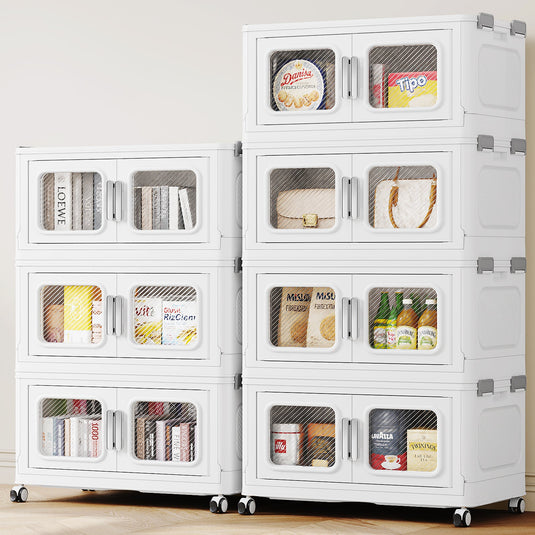
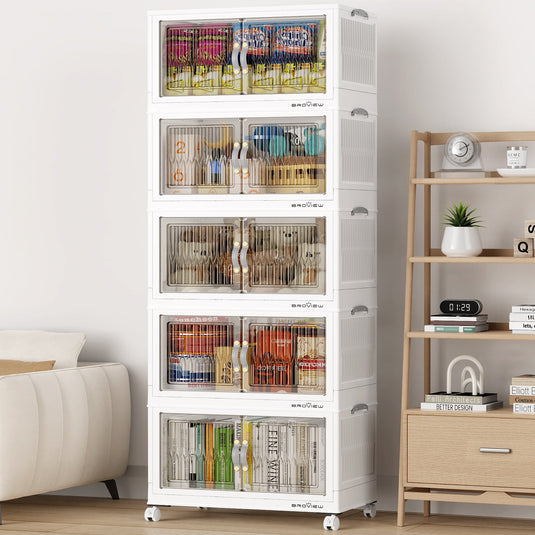
When evaluating clear versus opaque storage boxes, people often fall into a subconscious trap called "transparency bias." We naturally gravitate toward clear plastic because our brains prefer the security of instantly seeing our belongings. However, constant visibility prevents true "sensory rest"—the mental relief that occurs when your eyes stop processing background clutter. If every container is see-through, you haven't eliminated visual noise; you have just framed it.
To optimize your space, you must be strategic about visibility. The best storage containers for apartments and homes utilize both styles based on the room's core purpose:
-
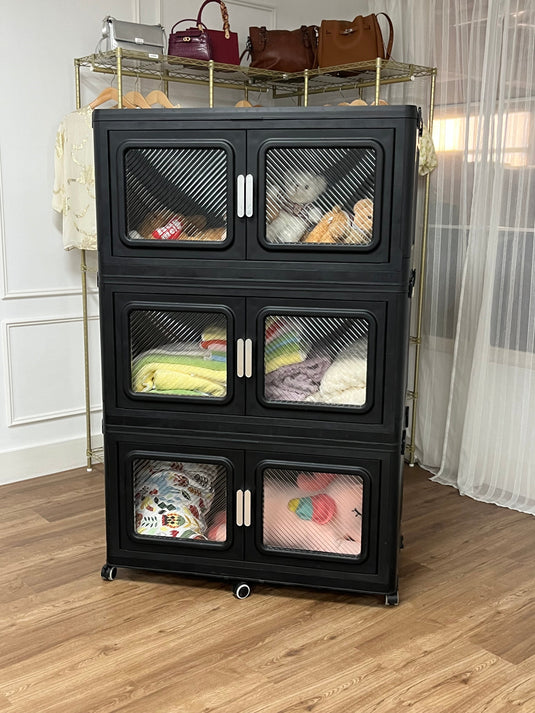
Opaque Bins (Mental Rest): Ideal for relaxation spaces like bedrooms or living rooms to hide chaotic items like spare cables and unread mail.
-
Clear Bins (Search Efficiency): Perfect for high-utility zones like kitchen pantries, where rapid retrieval of daily ingredients prevents morning frustration.
This deliberate balance transforms your daily routine. While reducing visual noise with opaque bins calms your nervous system, strategically pairing them with transparent bins prevents you from endlessly digging for hidden necessities. Maintaining these visual boundaries requires a systematic approach to daily habits.
The Five-Second Rule: Reducing Daily Friction Through Modular Systems
Have you ever experienced a sudden spike of anxiety when you cannot find a charger right as you are rushing out the door? Psychologists recognize this "search panic" as a massive drain on your mental battery. By implementing labeling systems for cognitive ease, you bypass the daily decision fatigue of trying to remember where things live. Instead of treating your kitchen junk drawer like a bottomless pit, a simple word on a bin gives your brain a definitive boundary.
Think of every household essential as a car requiring a dedicated "parking spot" at the end of the day. When you utilize stackable modular storage systems, you assign these parking spots vertically to effortlessly maximize tight closets. This modular scalability means your organization grows smoothly without creating new messes. Interlocking bins act like reliable building blocks, ensuring your home office supplies always return to a predictable, secure location.
Embracing these minimalist home storage solutions ensures you can reliably retrieve what you need in under five seconds. Once your items have marked parking spots, how you display them becomes the next crucial factor in managing environmental psychology.

Closed Containment vs. Open Shelving: Managing Environmental Psychology
Look at your living room bookcases. While displaying favorite novels and framed photos might seem stylish, every exposed object carries "visual weight"—a tiny, subconscious demand on your attention. When weighing open shelving versus closed containment, psychologists find that seeing dozens of individual items forces your brain to constantly process them, quietly draining your mental battery.
We can mitigate this exhaustion by creating a "clean horizon" using opaque boundaries. Tucking those loose supplies into a solid box instantly quiets the room. In the environmental psychology of residential spaces, smoothing out the visual landscape in high-stress areas like a home office proves essential because it physically lowers your biological stress response.
Achieving genuine peace requires balancing aesthetics with biology. Mastering this method of organizing for stress reduction ensures your surroundings recharge rather than drain you. Taking control of this visual weight allows you to create immediate mental clarity.
Your First Box: A Three-Step Action Plan for Immediate Mental Clarity
By treating a container as a boundary for visual noise, organizing becomes an act of self-care rather than a tedious chore. You can begin decluttering in under ten minutes:
-
Pick one chaotic surface.
-
Find one box (repurposed storage boxes or closet organizers work perfectly).
-
Label it and drop the items inside.
Maintain clarity using this simple 'one-box' rule. You aren't aiming for a perfectionist's home; you are simply closing the open tabs in your brain. Each time you contain visual chaos, you earn a genuine sigh of relief and reclaim your mental focus.