
You know that feeling when you open your hall closet and pray nothing falls on your head? Perhaps you have spent ten frustrating minutes digging through an "everything drawer" just to find one AAA battery. Every misplaced item adds an unnecessary layer of stress to your daily routine.
According to environmental psychology studies, this visual background noise actively drains our mental energy. Most of us default to spreading belongings across floors and shelves, eating up our precious horizontal footprint. We mistakenly believe that merely hiding our stuff in side-by-side boxes will fix the underlying mess.
Reclaiming your space requires shifting from hiding clutter to building a retrieval system. Think of your closet like a crowded city that has run out of room. Instead of expanding outward, you must build skyscrapers, unlocking the untapped potential of your vertical storage plane.
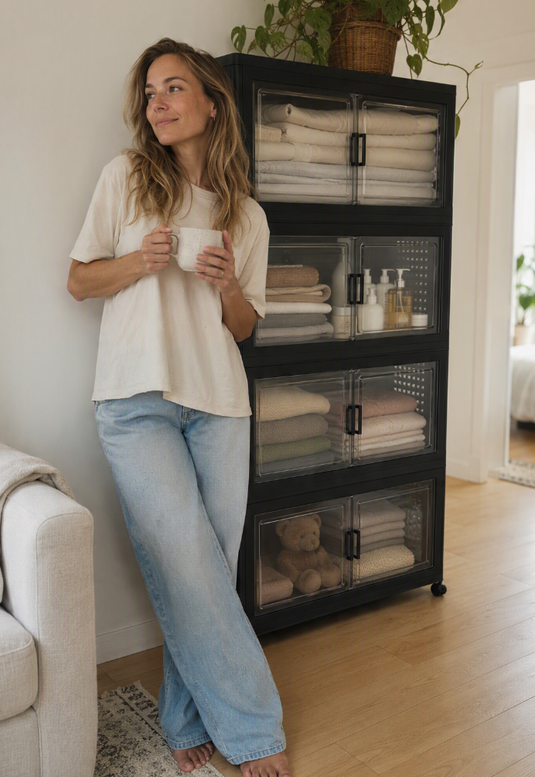
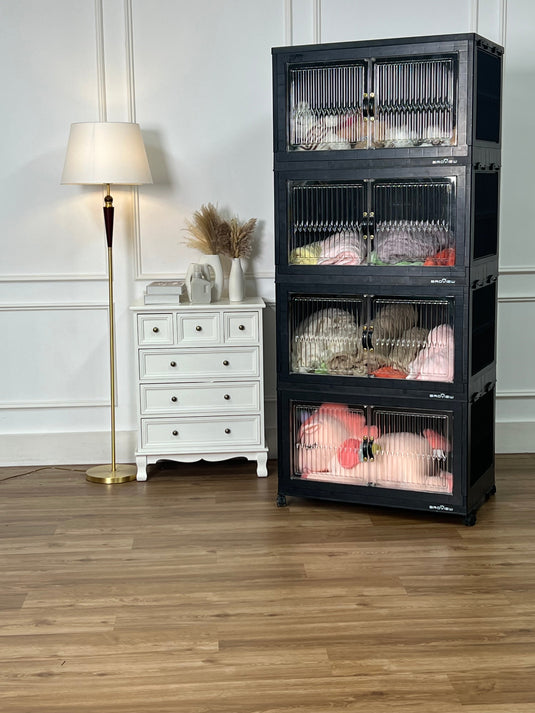
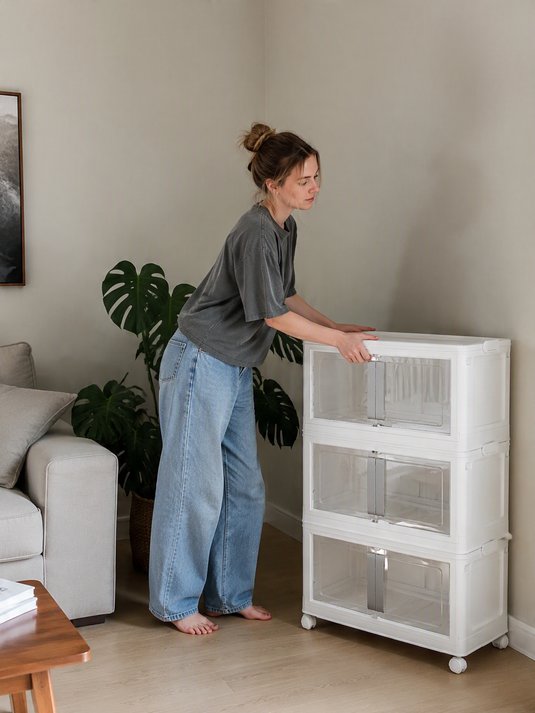
Transforming a chaos corner into a calm oasis is surprisingly simple once you look up. By utilizing stackable bins for small apartments, you maximize empty air space. These modular units act as powerful vertical storage solutions, making the chore of decluttering small spaces feel like an immediate victory.
The Skyline Strategy: Why Vertical Storage Reclaims Your Floor Space
Tripping over shoe piles is a universal frustration in small living spaces. Every item resting on the ground has a "storage footprint"—the actual physical floor area it claims. When we rely on side-by-side boxes, we rapidly eat up our walkable space, making any room feel instantly cramped and chaotic.
The secret to maximizing square footage is treating your apartment like a crowded city: when you cannot build wider, build skyscrapers. This requires identifying "dead air," the empty, unused vertical space hovering directly above your belongings. By switching to stackable storage, you can reduce an item's footprint by up to 75%. In fact, utilizing just two feet of vertical dead air along the walls of a standard 500-square-foot apartment unlocks the stacking potential of an entirely new closet.
You can easily locate this hidden real estate today with a three-step audit:
-
Measure the gap between your highest closet shelf and the ceiling.
-
Check the tops of your kitchen cabinets for open vertical zones.
-
Identify empty floor corners that could fit a tall, narrow tower.
True vertical home organization finally gives you room to breathe. Once you start building upward, however, identifying the contents of those taller stacks becomes the new priority.
Transparent Wins: Why Clear Acrylic Bins End the 'Where is it?' Hunt
Buying a third bottle of window cleaner because the others are buried in a dark cabinet is a classic symptom of "search latency"—the wasted minutes spent hunting for everyday items. Opaque boxes might hide clutter, but they also hide your belongings, creating a frustrating guessing game. Swapping solid boxes for transparent storage bins instantly removes this friction.
Seeing exactly what you own creates a built-in visual inventory for your home. When supplies are always visible, your brain naturally tracks when you run low on essentials, permanently stopping accidental duplicate purchases. This effortless tracking is the core advantage of minimalist storage systems, turning vertical stacks from a game of hide-and-seek into a functional, easily accessible supply wall.
The ultimate test of this setup is retrieval speed. If you cannot locate an item within ten seconds, your organization needs adjusting. Upgrading to clear acrylic stackable bins guarantees a passing grade every morning. Visible inventory only works, however, if the newly built towers remain perfectly secure.
Measuring for Modular Success: How to Choose Interlocking Bins
Discovering a newly purchased organizer sticks out half an inch and prevents the cabinet door from closing is a preventable frustration. Grabbing a simple measuring tape before hitting the store prevents this heartbreak and ensures a flush-fit—meaning your container aligns smoothly without hanging over the edge. Simply extending your tape from the back wall to the front lip gives you the critical baseline for measuring cabinet depth.
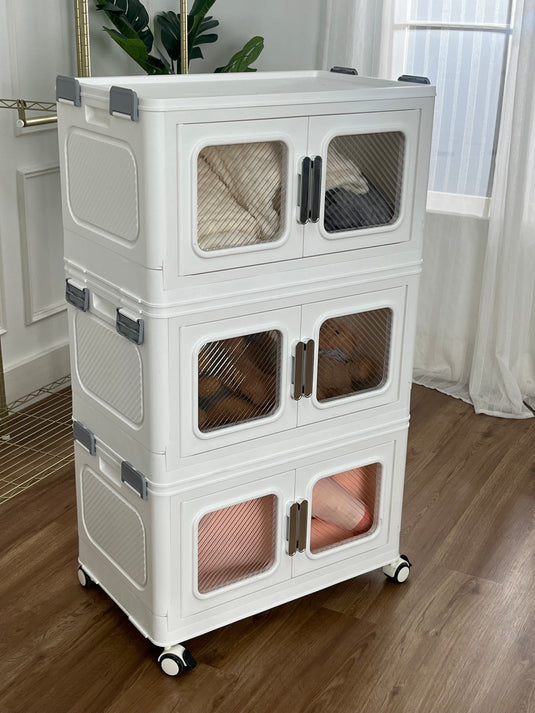
Once you have your dimensions, the next secret to a secure storage tower is choosing modular interlocking bins. "Modular" simply means pieces designed to fit together perfectly like building blocks, utilizing built-in ridges that lock the top unit onto the bottom one so they never slide around. When shopping for these stackable containers, rely on this quick checklist:
-
Depth of shelf minus 1 inch
-
Height of total stack vs. shelf gap
-
Presence of interlocking grooves
Taking two minutes to verify these details completely eliminates the danger of an accidental plastic avalanche when you reach for a towel. With these perfectly sized, sturdy towers acting as your new spatial foundation, conquering high-traffic zones becomes a straightforward task.
Conquering the Kitchen and Bathroom: Organizing High-Traffic Zones
Tiny kitchens and cramped bathrooms often contain chaotic drop zones where items disappear into deep shelving. Instead of letting the back 50% of your cabinets remain a graveyard for lost sponges, use your newly measured bins to overhaul your under-sink storage and create a sliding drawer system.
This is where pull-out modularity changes the game. Placing longer, interlocking bins on existing shelves creates containers that slide forward, instantly revealing what hides in the back. You don't need power tools or permanent hardware to implement these space-saving organization ideas; pulling the bottom bin forward simply brings the entire stack into the light.
Mastering this trick lets you instantly upgrade the messiest spots in your home. Target these high-impact zones for stackable bins:
-
Under the kitchen sink (cleaning supplies)
-
Pantry (dry goods)
-
Bathroom vanity (skincare/first aid)
Even the dreaded "everything" drawer benefits from this approach when you use shallow trays to build categorized stacks. With your essentials finally visible and easy to grab without causing an avalanche, the final step is maintaining them through consistent labeling.
The 10-Second Rule: Labeling and Maintaining Your New Environment
You’ve stacked the bins and cleared the floor, but the real test of home organization happens on a frantic Tuesday morning. Can you grab what you need and get out the door? This is where the 10-Second Rule comes in: if finding your spare keys takes longer than ten seconds, your retrieval system needs a tweak. Surviving a busy work week requires shifting from merely storing items out of sight to building effective labeling systems that act as a reliable map for your entire household.
Instead of writing highly specific tags that become outdated the moment you buy a different brand of soap, group your containers by how often you actually reach for them. Broad, predictable zones ensure your upgraded spaces remain a permanent clutter-free environment because everyone knows exactly where things belong. Try sorting your bins using these simple labeling categories for small apartments:
-
'Daily Use'
-
'Monthly Use'
-
'Seasonal'
-
'Emergency'
This tiered setup organically supports seasonal rotation throughout the year. When the weather shifts, simply swap the position of your bins—moving heavy winter scarves out of the way while bringing breathable summer hats into daily reach—without emptying the entire closet. By pairing smart labels with flexible habits, your system practically maintains itself.
The 30-Minute Transformation: Your Action Plan to Start Small
Imagine looking around your home and realizing you suddenly have room to breathe. Reclaiming three square feet of floor space might sound like magic, but it is just basic physics. By shifting your perspective from flat storage to the vertical skyline of stackable bins, you hold the power to transform visual clutter into a functional system.
The biggest hurdle now is simply beginning, which is why you must avoid the perfectionist trap of trying to overhaul everything this weekend. Instead, grab two or three clear bins and set a timer for a 30-minute mini-organization project. Target a single high-traffic zone that causes daily frustration, like the chaotic shoe pile by the door or your overflowing bathroom vanity.
Once your first vertical stack is in place, you will immediately notice the mental weight lifting. To protect this peace, commit to a quick daily check-in to ensure items return to their designated homes. This simple rhythm is the true secret to decluttering small spaces, proving that smart storage is the real foundation of accessible minimalist living.
You now understand how to unlock the hidden real estate hiding in plain sight right above your clutter. Every time you utilize that vertical plane, you are not just putting things away; you are buying back your time and mental energy. Start with one small corner today, and watch your environment rapidly shift from chaos to calm.