We’ve all been there: you open the hall closet to grab a simple lightbulb, and an avalanche of misplaced holiday decorations falls on your head. Frustrated, you might rush out to buy matching bins to hide the mess, falling straight into what experts call the "Organizing Trap." In practice, purchasing beautiful boxes to simply conceal unsorted clutter never solves the root problem.
True home organization relies instead on the "Sort-First Rule," which prioritizes decluttering before choosing organizational containers. Adopting a basic one-in, one-out mindset ensures every object you actually keep earns a permanent, functional home. Mastering exactly when and how to use storage containers to organize your things ultimately transforms chaotic closets from daily stressors into manageable, tidy spaces.
Stop Buying Bins for Your Junk: How to Categorize Your Belongings Like a Pro
Now that you’ve decluttered, the secret to keeping your space tidy isn't just throwing things into random boxes. It’s deciding where things live based on how often you grab them. Divide items into "Active Storage" (used weekly, kept in easy-to-reach Prime Real Estate) and "Archival Storage" (yearly holiday decor tucked away on high shelves). Mastering this requires a simple step-by-step guide to categorizing household belongings.
This straightforward workflow guarantees everything finds a functional home:
-
Empty the space completely.
-
Sort items by frequency of use.
-
Measure your items (if wondering what size storage container you need for garage items, always measure your largest object first).
-
Match dimensions to the container.
Skipping this prep work often leaves you with awkward bins and a lighter wallet. Sorting and measuring first ensures your new storage solutions actually hold what you own while fitting your shelves neatly. Once you know exactly how big your bins need to be, the next hurdle is deciding what they should be made of.
Clear Plastic vs. Opaque Fabric: Picking the Right Material for Your Environment
Knowing your bin size is great, but the material must match the room. When asking yourself whether to use clear or solid storage bins for closets, consider visual clutter. Solid bins easily hide messy items like mismatched socks, making the space feel instantly calmer. Conversely, visibility is crucial in the kitchen. Using clear plastic bins for pantry shelves lets you see your snack inventory at a glance, stopping accidental double-buying.
Environment dictates your choice just as much as daily visibility. Here is how to match specific materials to their proper zones:
-
Clear Plastic: Perfect for quick kitchen access.
-
Breathable Fabric: Ideal for protecting daily closet clothing.
-
Heavy-Duty Plastic: Vital moisture-resistant containers for basement organization to block dampness and mildew.
-
Specialty Cardboard: Crucial for organizing sentimental items in acid-free boxes to stop old photos from yellowing.
If you are currently debating plastic bins vs. cardboard boxes for attic storage, always ditch standard grocery boxes—they attract pests and degrade during seasonal temperature swings. With your protective materials selected, maximizing small spaces through vertical stacking and under-bed storage becomes the next priority.

Maximizing Small Spaces: Vertical Stacking and Under-Bed Secrets
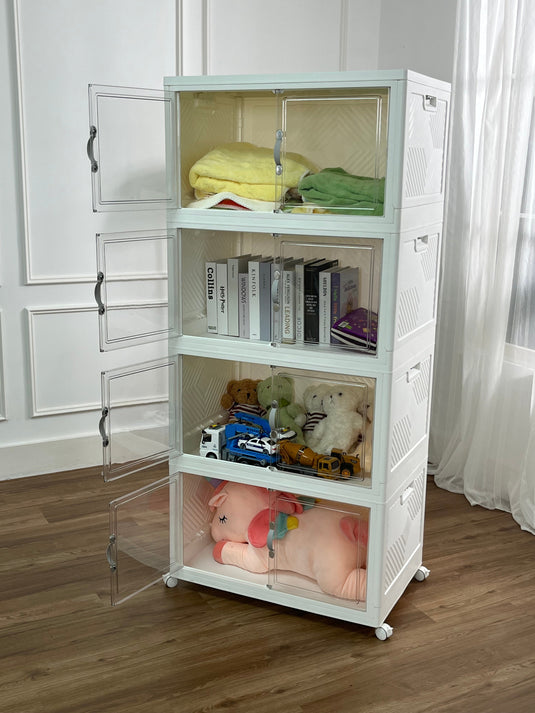
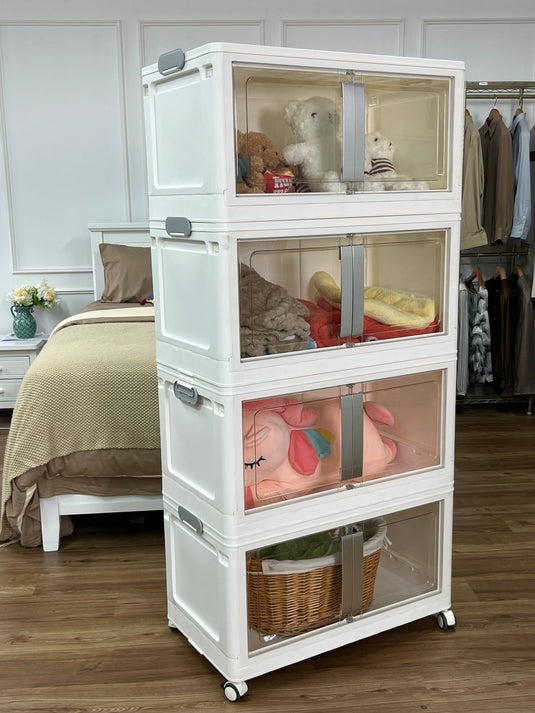
Have you ever felt completely out of floor space? The secret is learning to use "dead zones," those empty gaps we naturally overlook. By choosing stackable storage solutions for small apartments, you instantly expand your room by building upwards. Treat your vertical footprint like a skyscraper; maximizing vertical space with shelving units lets you store twice as much without crowding walkways. When floor space vanishes, look down. Utilizing under-bed storage for seasonal wardrobe rotations keeps bulky winter sweaters completely out of the way.
Flexibility matters just as much as extra room. This is the magic of modular organizational systems for home offices. Instead of one messy box, you use interlocking bins that rearrange easily to keep tech cords and papers tidy. These modular systems act like building blocks, adapting to fit shelves or drawers as your life changes. Now that you have conquered dead zones and stacked your items efficiently, implementing labeling and airtight seals will secure your long-term success.

The Final Touch: Labeling and Airtight Seals for Long-Term Success
Staring at a wall of matching blank boxes and wondering which one holds the winter gloves is a common frustration. Giving your bins a clear "identity" instantly solves this mystery. Labeling storage containers for easy access ensures anyone in the family can find what they need without rummaging. However, an identity label is only half the battle for textiles. You also need a physical barrier against moisture. Using airtight seals for long-term clothing storage—usually a rubber gasket lining the inside of the lid—completely blocks out pests like moths and prevents musty odors.
While upgrading your spaces, consider weaving eco-friendly alternative storage materials like bamboo or recycled glass into your system. Once you choose your preferred storage containers, maintaining your setup requires a simple toolkit:
-
Handheld labeler
-
Chalkboard tags
-
Masking tape and a Sharpie
With everything safely sealed and correctly named, you are ready to transition from chaos to order with a quick 15-minute action plan.

Your 15-Minute Action Plan: Transitioning from Chaos to Order
You no longer have to stare at a leaning tower of mismatched boxes, hoping the mess magically solves itself. Applying the principles of when and how to use storage containers transforms overwhelming chaos into functional home organization. Start today with three simple steps: pick just one chaotic drawer, sort the contents to remove the trash, and only then assign your appropriate storage solutions. Remember, done is always better than perfect.
The real magic happens when you establish a weekly five-minute maintenance routine to keep those new spaces functional. This simple habit guarantees the psychological relief of a completely mystery-free home, where every item has a logical resting place. Opening any closet and instantly finding exactly what you need without a single moment of digging is the ultimate vision of ease—a home that finally works seamlessly for you.