We've all experienced the dreaded plastic avalanche—that moment you open a kitchen cabinet and a dozen mismatched lids tumble out onto the floor. Digging through a chaotic drawer just to find a top that actually fits your leftover pasta is incredibly frustrating. According to behavioral psychology studies, dealing with these minor household blockages directly causes "decision fatigue," a state where your brain gets exhausted from making too many tiny, unnecessary choices. Instead of peacefully putting away groceries, you are wasting mental energy trying to force a square lid onto a round tub.
Embracing the uniformity principle is the easiest way to permanently stop this daily annoyance. By swapping out a chaotic collection of old takeout boxes for a matching set of clear plastic containers, you completely eliminate the guesswork. Every lid fits smoothly, and you can see exactly what is inside without opening anything, whether that means spotting a half-used bag of flour or grabbing the right kids' craft supplies. Ultimately, fixing your storage situation isn't about achieving a picture-perfect, magazine-worthy home; it is simply about reclaiming 15 minutes of your busy morning.
Many shoppers wonder if they should upgrade to heavier materials, but everyday realities often make plastic storage bins the smarter choice for active households. Real-world testing reveals that modern, BPA-free plastics offer incredible durability without the shatter risks associated with glass. Dropping a lightweight plastic bin full of LEGOs or gym clothes is a harmless accident, whereas dropping a heavy glass container creates a serious safety hazard for children and pets. Quality plastic gives you the same airtight freshness to save money on groceries while remaining light enough to comfortably carry from the fridge to the counter.
Finding the exact right shape, seal, and size for your specific needs does not have to be a guessing game. Moving beyond the kitchen, this guide provides a practical room-by-room organizational blueprint to tame the messes hiding in your closets, garage, and playrooms, helping you stop losing things and finally bring a sense of visual peace to your living space.

Not All Plastic Is Created Equal: Decoding Recycling Codes and BPA Safety
Have you ever flipped a plastic tub over and wondered what those tiny recycling numbers actually mean? When shopping for certified BPA-free food storage sets, grabbing just any clear box isn't enough. You want to look specifically for a "5" inside the triangle, which identifies the plastic as Polypropylene. This material is the gold standard for your kitchen because it handles hot microwave leftovers without melting or leaching harmful chemicals into your family's meals.
Understanding these common codes helps you match the right container to the right room, maximizing your recycled plastic storage bin durability for years to come:
-
Number 1: Best for clear, lightweight pantry organization, but keep it out of the microwave.
-
Number 2: Thicker, utility-grade plastic perfect for heavy garage tools or cleaning supplies.
-
Number 5: Food-grade, heat-resistant, and ideal for daily meal prep.
Beyond heat, you also have to consider the freezer, where everyday plastics suffer from thermal brittleness and shatter like thin glass if accidentally dropped. Choosing a cold-safe, durable base is ultimately only half the puzzle when trying to keep your groceries fresh. Even the highest-quality plastic won't save your favorite snacks if air slips inside the container, making airtight gasket seals non-negotiable for dry goods.
Kitchen Mastery Part 1: Why Airtight Gasket Seals are Non-Negotiable for Dry Goods
Grabbing a handful of premium almonds only to find they’ve gone completely stale is a universal frustration. When shopping for the best plastic storage containers, the secret to extending the shelf life of expensive nuts and seeds is the silicone ring hidden inside the lid. This ring creates an airtight gasket seal, locking out the humidity that turns crackers soft and brown sugar solid. To verify a seal's quality, try the "shaker test": put water in the empty bin, secure the lid, and shake it vigorously over the sink. If a single drop escapes, air will inevitably enter.
Once you secure reliable airtight pantry containers for dry goods, the next hurdle is buying the correct capacity to permanently eliminate those half-empty, rolled-up bags. Baking staples are sold by weight, but bins are measured by volume, making guessing at the store frustrating. Use this simple volume-to-weight cheat sheet so your groceries fit perfectly:
-
5 lbs of Flour: Needs a 4.0-quart container (extra headroom prevents the flour from packing down).
-
4 lbs of Granulated Sugar: Fits beautifully into a 3.2-quart container.
-
2 lbs of Brown Sugar: Slides easily into a 1.5-quart container.
Properly storing these dry goods protects your grocery budget while bringing lasting visual peace to your cabinets. Mastering room-temperature staples perfectly sets up the colder, messier side of food preservation: taming the fridge with handled bins and stackable sets.
Kitchen Mastery Part 2: Taming the Fridge with Handled Bins and Stackable Sets
Finding a forgotten, fuzzy jar of salsa pushed to the back of the refrigerator shouldn't be a regular occurrence. To stop wasting grocery money on duplicate purchases, you must establish a "visual inventory." Transferring loose items into completely clear plastic containers lets you instantly see exactly what remains before you even make a grocery list.
To maintain this newfound visibility, try adopting zone-based refrigeration for your everyday staples. Grouping similar items inside fridge organization bins with handles effectively builds custom sliding drawers directly on your existing shelves. Instead of knocking over front-row bottles to reach the back, you simply pull the bin toward you, retrieve your mustard, and slide the entire zone back into place. This clever setup naturally promotes a "First In, First Out" system, effortlessly keeping older expiration dates right up front.
Beyond horizontal sorting, modular, stackable sets help you reclaim the empty vertical space between tall shelves. A sturdy bin holding deli meats can easily support a matching tray of cheese sticks on top, instantly doubling your storage capacity. Once your cold ingredients are visibly zoned, storing cooked meals requires a slightly different strategy involving microwave-safe plastics that last.

The Meal Prep Dilemma: Choosing Microwave-Safe Plastics That Last
Reheating last night’s spaghetti often leads to permanently orange storage bins. When weighing plastic vs glass meal prep containers, lightweight plastic wins on portability but requires extra care to stay smooth. Overheating fatty foods creates "pitting"—tiny, rough blisters on the container's interior that ruin the finish. You can prevent this degradation and resist deep stains by lightly coating the inside with cooking spray before adding food, which forms a temporary protective barrier against highly acidic sauces.
Safe heating techniques go beyond aesthetics to actively extend your storage's lifespan. Relying on microwave safe plastic containers for reheating ensures the material withstands high temperatures, but you must still manage the trapped moisture. The secret to preventing warped lids and dangerous pressure vacuums is the "vented lid" technique. Instead of sealing the container tightly or removing the cover completely, simply rest the lid off-center. This traps enough heat to warm food evenly while allowing excess steam to safely escape.
Even perfectly maintained food storage eventually reaches its limit. Once a bin becomes persistently cloudy or develops deep pitting that harbors lingering odors, it is time to recycle it. Mastering these kitchen organization strategies naturally frees up your mental energy to tackle other chaotic spaces. Applying this exact same logic of durable, functional containment to your bedroom can easily transform your wardrobe.
Closet Transformation: Why Uniform Shoe Boxes and Ventilated Bins Save Your Wardrobe
Staring at a chaotic mountain of footwear on the floor makes you wonder how a supposedly organized closet became an obstacle course. The secret to conquering this zone is vertical density—maximizing space by stacking items straight up toward the ceiling. Replacing mismatched retail cardboard with uniformly sized containers instantly increases your vertical storage capacity by up to 40 percent.
Protecting your favorite sneakers and leather accessories requires more than just getting them off the ground. Using ventilated shoe boxes for closet storage provides a crucial defense against trapped moisture. Small, built-in air holes act like breathable windows, allowing fresh air to circulate while preventing musty odors, dust, and potential mold buildup from ruining your wardrobe.
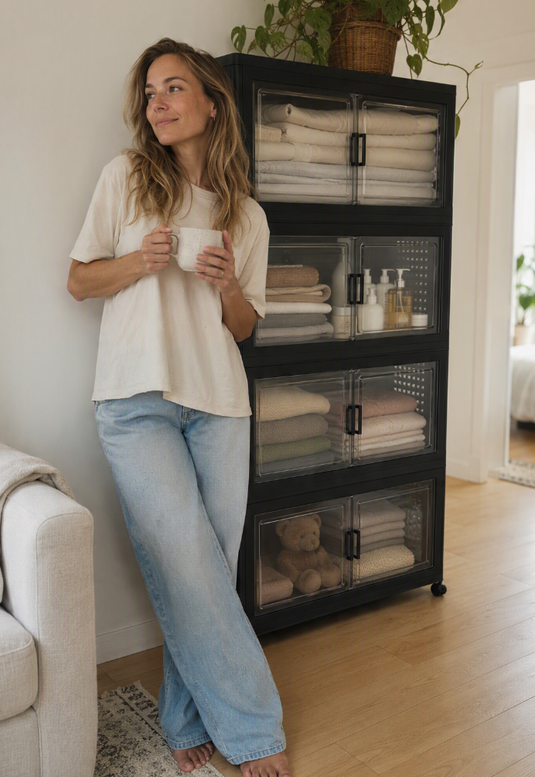
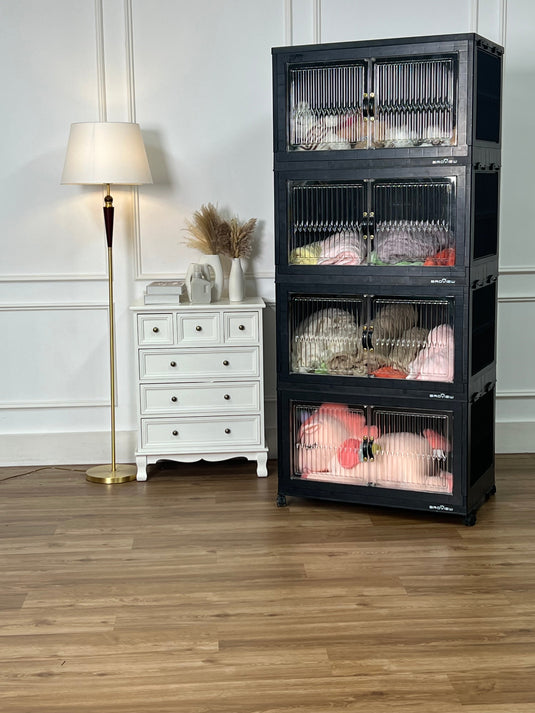
Upgrading your containers also transforms how you interact with your closet on a daily basis. Traditional stackable closet organization bins often force you to lift five heavy boxes just to reach the bottom pair of shoes. Drop-front accessibility eliminates this chore completely; featuring a clear plastic door that pulls outward, these specialized bins let you grab exactly what you need while the entire tower stays perfectly intact.
Achieving this visual peace creates a reliable system that finally works alongside your hurried morning routine. Once your daily-wear items are neatly categorized and effortlessly accessible, you will immediately notice how much floor space you have reclaimed. Taking advantage of that newly cleared room sets up your seasonal swapping strategy perfectly.

Seasonal Swapping: Utilizing Under-Bed Space with Low-Profile Wheeled Bins
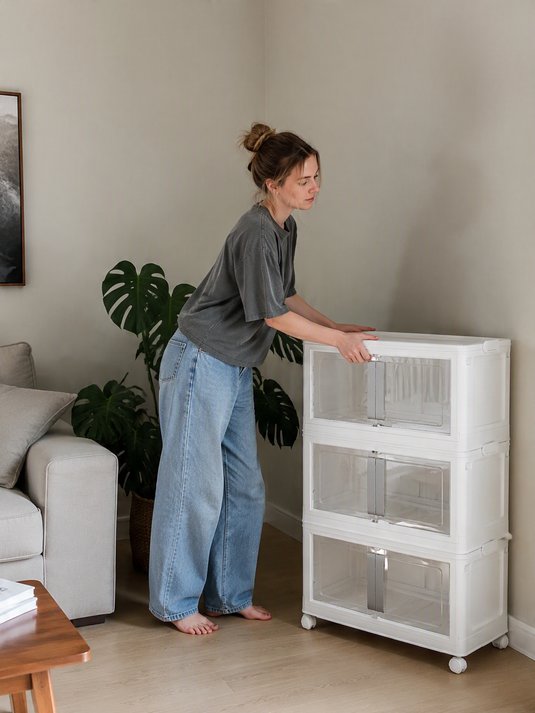
Packing away heavy winter sweaters or bulky beach towels often leaves closets bursting at the seams. Instead of fighting for hanger space, you can reclaim the forgotten "dead space" hidden beneath your mattress. Treating this empty floor area as a secondary closet allows you to cycle out off-season garments effortlessly. Utilizing flat, rectangular plastic storage bins immediately doubles your bedroom's holding capacity without requiring bulky new furniture.
Floor damage and back strain are common casualties of dragging heavy boxes across a room. To make these under-bed seasonal clothes storage solutions truly functional, prioritize low-profile models equipped with built-in wheels. This simple feature allows a fully loaded bin to glide outward with a gentle pull, giving you instant access to extra blankets whenever a chilly night hits.
Because these containers sit undisturbed for months, a tight closure is your best defense against dust bunnies and household pests. Choosing boxes with long-format latched lids creates a secure seal that locks out moisture, ensuring fabrics emerge fresh next season. With the bedroom floor finally clear and seasonal gear safely tucked away, it is time to tackle the morning bathroom rush with acrylic organizers.
Bathroom Clarity: Acrylic Organizers for a Spa-Like Vanity
The frantic morning scramble of digging through cluttered cabinets for a single tube of toothpaste is a daily headache you can easily eliminate. You can find morning essentials in under five seconds by switching to clear acrylic storage. Unlike standard porous boxes, lidded acrylic containers act as a humidity-resistant shield, protecting your expensive cosmetics and cotton swabs from daily shower steam. Because you can see exactly what is inside, these transparent bins instantly give your vanity a clean, spa-like feel.
Below the sink, your deep or shallow drawers can quickly become chaotic drop zones. To fix this, use clear acrylic bathroom drawer organizers that literally snap together. Follow this 3-step guide to measuring and mapping a bathroom drawer for maximum bin coverage:
-
Measure the exact inside length, width, and height of your empty drawer space.
-
Sketch a layout map, placing large bins in the back and smaller daily items up front.
-
Select modular interlocking pieces that click firmly together so they never slide out of place.
Once locked securely, these custom compartments ensure every comb has a home. Using these interlocking bins for bathroom drawers stops small items from tumbling into a tangled mess. With your bathroom routines finally running smoothly, you can bring that same functional control to your workspace.
The Organized Office: Boosting Productivity with Desktop Modular Systems
Your workspace can quickly transform from a productive zone into a cluttered catch-all. Traditional one-piece desk trays force you into a rigid layout, leaving tiny compartments empty while oversized items spill over. Upgrading to modular office supplies desktop organizers gives you complete control over your daily workflow. These individual containers can be rearranged instantly, creating a customized setup that fits the specific tools you need right now.
Arranging these adjustable pieces efficiently introduces the "Reach Frequency" rule. This straightforward strategy prioritizes bin placement based on how often you actually grab an item. Essential daily tools like your favorite pens sit right in the front, while backup staples get pushed to the back. Applying this practical logic keeps your immediate desk surface perfectly clear.
Beyond physical stationery, tech accessories often form a chaotic web of "cable spaghetti" inside your desk. You can repurpose small divided containers to keep individual charging cords neatly coiled and separated. Using these interlocking bins for your desk's junk drawer effectively tames the tangled mess of spare earbuds and flash drives. With your delicate desktop items now sorted, it is time to tackle larger challenges by choosing heavy-duty totes for the garage, attic, and basement.
Heavy-Duty Storage: Choosing Totes for the Garage, Attic, and Basement
Moving items out of the climate-controlled house and into unheated spaces requires a massive step up in durability. Unlike lightweight desktop organizers, heavy-duty garage storage totes with lids are molded from impact-resistant resins designed to survive freezing winters and sweltering summers without shattering. If your storage space has windows, sunlight becomes a silent destroyer. Constant exposure causes UV degradation, making clear plastics brittle and fading the items inside. Choosing opaque bins blocks these harmful rays, keeping your seasonal yard decor and power tools perfectly protected.
Structural strength is equally crucial when maximizing vertical space. Look for plastic storage bins engineered with heavily textured, reinforced corners. This specific design distributes weight outward, allowing you to stack multiple heavy boxes safely without the bottom container buckling under the pressure.
| Feature | Standard Storage Totes | Heavy-Duty Storage Totes | | :--- | :--- | :--- | | Weight Limit | 20–35 lbs per bin | 50–75+ lbs per bin | | Lid Style | Basic snap-on (Dust protection) | Locking latch or gasket (Pest resistance) |
Securing those stacks requires matching your lid to specific environmental threats. A basic friction lid easily repels attic dust, but damp basements or sheds demand locking latches to keep mice out of your soft camping gear. Once your utility storage is safely locked down, it is time to bring that same focus on tough containers indoors for kids' rooms and playrooms.
Kids' Rooms and Playrooms: Durability and Safety in High-Traffic Zones
Every parent knows the pain of stepping on a stray building block, but the wrong storage can cause even bigger headaches. When organizing playrooms, the best plastic storage containers prioritize child safety over perfect aesthetics. Choose flexible, shatter-proof plastics that can survive being dropped or kicked, since rigid materials often snap into dangerous sharp edges. Rounded corners are equally essential to prevent painful scrapes during energetic daily play.
Speeding up the evening cleanup routine requires removing everyday friction. Instead of making kids wrestle with tight lids, use open-top plastic storage bins to establish a "toss-in organization" system. This practical approach lets children easily throw items directly into their designated spots without precision. When clearing a massive pile of wooden trains only requires dropping them into a wide basket, cooperation rises dramatically.
Even the smartest sorting methods fail if children cannot remember where specific toys belong. Visual labeling solves this problem brilliantly for toddlers and pre-readers. Taping a printed picture of a dinosaur or puzzle piece onto the container gives them instantly recognizable directions. Eventually, these heavily handled boxes will accumulate sticky fingerprints and playground grime, meaning you will need to know how to properly remove stubborn stains.
The Science of Cleaning: Removing Tomato Stains and Persistent Odors
Even the best plastic storage containers frequently fall victim to leftover spaghetti sauce. This happens because plastic is naturally porous, meaning it has microscopic holes that trap food molecules and hold persistent smells. Before tossing an orange-tinted bowl, try erasing stubborn food stains using direct sunlight and a baking soda paste. For lingering smells, use the "overnight newspaper" trick: crumple dry, black-and-white newspaper inside, seal the lid, and let the paper absorb trapped scents by morning.
Extending the life of your bins requires adjusting how you wash them. Always avoid abrasive cleaning pads; they create tiny, invisible scratches that easily harbor bacteria and make future cleaning nearly impossible. Instead, knowing how to clean stained plastic bins safely relies on utilizing gentle, natural cleaning pastes:
-
Baking soda paste: Mix three parts baking soda with one part water to lift heavy grease without scratching the surface.
-
Vinegar solution: Combine equal parts white vinegar and warm water to safely dissolve cloudy mineral build-up.
-
Lemon scrub: Rub half a lemon over mild stains to bleach the plastic naturally using citric acid.
Eventually, no amount of gentle washing can save a deeply gouged or warped tub. Recognizing when a container is genuinely worn out keeps your kitchen safe and sanitary. When that time arrives, knowing when to reuse and how to recycle becomes your next logical step.
Sustainability and the Lifecycle: When to Reuse and How to Recycle
Even the best tubs won't last forever. You will eventually notice cloudy, spiderweb-like lines forming near the corners of your favorite bins. This phenomenon, known as plastic fatigue, happens when daily wear slowly breaks down the material. Once these white stress marks appear, the container is structurally compromised. Recognizing this physical limit helps you understand recycled plastic storage bin durability, as highly fatigued plastics can no longer handle microwave heating or heavy stacking safely.
Retiring a warped bowl from the kitchen doesn't mean tossing it in the trash. Giving these items a secondary lifecycle is an excellent way to organize other rooms for free. While a cracked lid makes a container useless for keeping leftovers fresh, the sturdy base remains perfect for corralling loose garage hardware or holding messy kids' craft supplies. Shifting downgraded food storage into utility roles reduces household waste while effortlessly taming everyday clutter.
When a bin is completely destroyed, you might realistically wonder, are plastic storage containers recyclable in standard curbside pickup? The answer relies entirely on those stamped bottom symbols we discussed earlier. Numbers 1, 2, and 5 are widely accepted by municipal programs, while others require drop-off centers. Properly clearing out your worn tubs makes room for better systems, setting the stage for a practical 30-minute organization plan.
Your 30-Minute Organization Plan: Starting Your Plastic Storage Journey Today
You no longer have to tolerate the daily frustration of chaotic cabinets and missing lids. By intentionally selecting the best plastic storage containers for your specific needs, you can transform an overwhelming chore into a highly functional system. The true metric of success here is "Visual Peace." When you standardize your clear plastic containers within a room, you replace visual clutter with calming uniformity, allowing your brain to quickly locate exactly what you need without stress.
To maintain this newfound order, always execute the "Measure Twice, Buy Once" rule. Checking your shelf depth before shopping prevents you from wasting money on bins that simply do not fit. Additionally, commit to the "One-In, One-Out" rule to protect your hard work. For every new item you bring into a freshly organized zone, an old item must be donated or tossed, ensuring future clutter never takes root.
Do not try to reorganize your entire house in one weekend. Instead, build your confidence and momentum by starting with just one small area, like a junk drawer or spice rack, using this 5-minute "One Drawer Challenge" checklist:
-
Empty: Remove everything and wipe the surface clean.
-
Sort: Discard broken, duplicate, or expired items.
-
Measure: Record the exact length, width, and depth of the space.
-
Containerize: Group the remaining items into appropriately sized plastic storage bins.
Mastering home organization is about creating practical systems that support your daily routine, not achieving magazine perfection. Each time you effortlessly slide out a perfectly sized bin, you reclaim a fraction of your time and energy. Take that first small step today, and enjoy a functional, intentional space that makes daily tasks noticeably easier.