You are standing in the middle of your garage, staring at a chaotic mountain of holiday decor and power tools. Navigating this obstacle course just to find a simple screwdriver is a perfect example of "clutter friction"—that frustrating resistance you feel when your belongings get in the way of daily life.
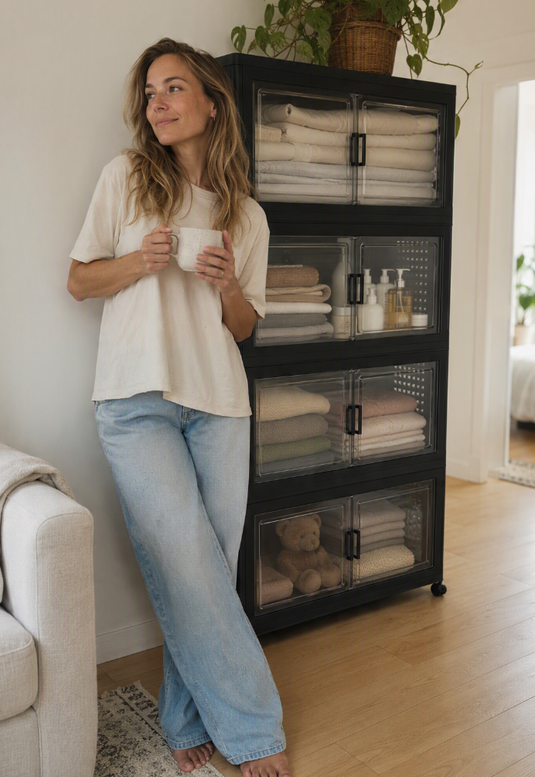
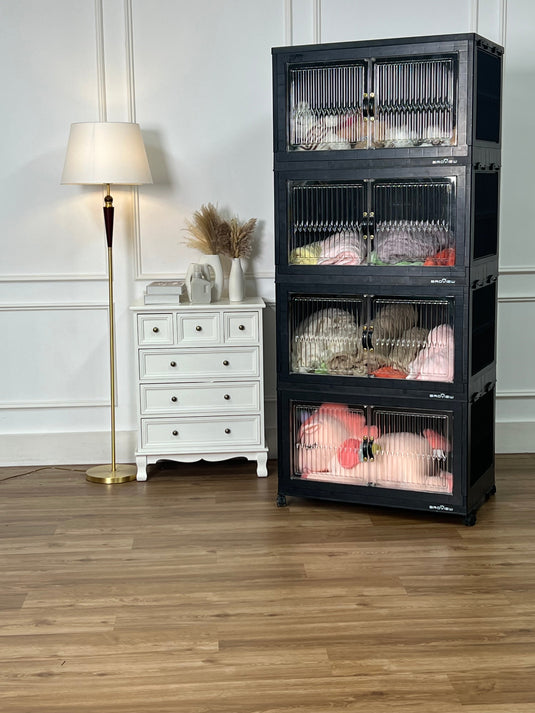
According to psychology experts, looking at semi-transparent, stacked boxes creates what is known as "visual noise." Even if those items are technically categorized, your brain still processes every shape and color, causing underlying stress. Effective home storage isn't merely about protecting items from dust or reclaiming lost floor space; it is about completely muting this mental overload with the right setup.
Deciding between storage bins vs storage cabinets ultimately comes down to the "Frequency of Access Rule," rather than just looking at the price tag. How often do you actually need to reach for those items? While plastic bins act like portable suitcases for your seasonal storage ideas, cabinets function as permanent mini-walls that hide everyday messes behind solid doors. Recognizing this fundamental difference helps you pick the best storage solutions for your space without overcomplicating your daily routine.

Mastering the 'Set it and Forget it' Strategy with Stackable Clear Plastic Totes
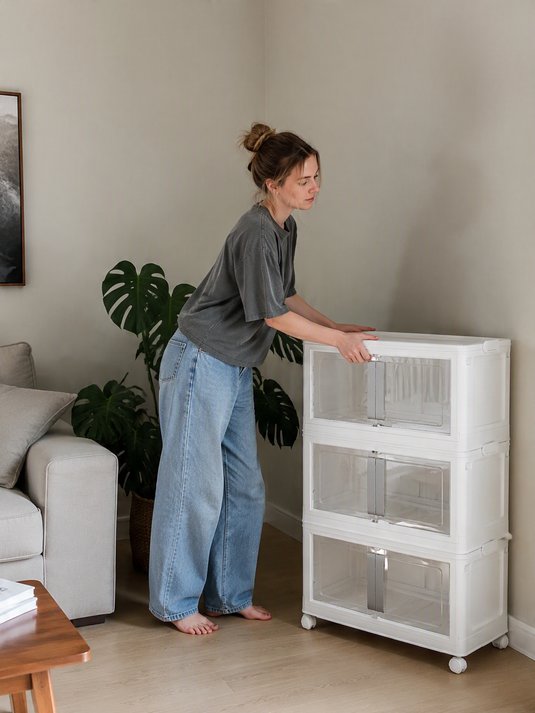
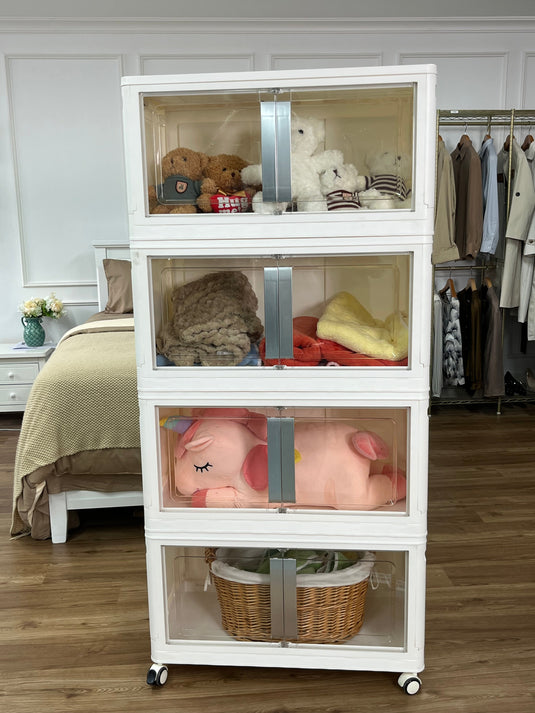
Searching through a cramped guest bedroom closet to find which cardboard box holds your winter coats is a common hassle. Swapping those mystery boxes for stackable clear plastic totes introduces an immediate upgrade known as the Transparency Benefit. Instead of opening every lid just to find a single scarf, your eyes do the scanning for you, eliminating the frustrating guesswork of deep storage.
With visibility established, conquer the air above by harnessing Vertical Volume. Maximizing vertical space means stacking straight up toward the ceiling to reclaim your precious floor space. However, this only works safely if you commit to uniformity; buying identical bins ensures the lid grooves interlock perfectly with the bases, preventing a dangerous "bin avalanche."
These transparent containers are ideal for items you only need occasionally, such as:
-
Holiday decor (essential for seasonal decor storage)
-
Out-of-season clothes
-
Camping gear
-
Backup linens
But beware of the Unstacking Limit. To avoid the nightmare of moving heavy containers just to reach the bottom one, never stack your totes more than three to four bins high.
While plastic bins dominate lightweight organization, they are not meant for everyday access. If you constantly unstack boxes just to grab a screwdriver, you've outgrown this method. That daily friction is exactly why heavy-duty cabinets are the secret to a professional-grade garage and home office.
Why Heavy-Duty Cabinets are the Secret to a Professional-Grade Garage and Home Office
The moment you try to organize a bustling workspace with portable plastic totes, you quickly realize you need something much more substantial. Adding cabinets to your space introduces a powerful concept called Architectural Storage. Instead of just piling containers against a wall, you are essentially building a new, functional mini-wall that completely changes the layout and feel of the room.
This physical boundary creates an immediate psychological benefit by drastically reducing Visual Weight. Even when perfectly stacked, clear bins force your brain to constantly process the chaotic shapes and bright colors of power tools, mismatched paint cans, or stacked files. Closing a solid door instantly mutes that mental noise, hiding those busy item silhouettes and transforming a stressful space into a calm environment.
Beyond aesthetics, true structural strength becomes critical when organizing heavy, dense equipment. Here, Static Load Capacity—the maximum weight a stationary shelf can safely hold—saves your gear. While a plastic tub will eventually warp or crack under the strain of heavy motor oil jugs or dense metal hand tools, heavy-duty garage storage cupboards are engineered to support massive weight without bending or bowing.
Finally, this robust architecture offers vital protection through lockable cabinets. Whether you are safeguarding hazardous automotive chemicals from curious children or prioritizing home office security by securing sensitive financial documents, steel doors provide peace of mind that plastic lids cannot match. Deciding which items belong behind these secure doors requires applying the Frequency of Access Framework.
Solving the 'Bottom Bin Nightmare' with the Frequency of Access Framework
We’ve all experienced the frustration of needing a single screwdriver, only to realize it is buried beneath three heavy plastic totes. This "Bottom Bin Nightmare" represents a classic failure in storage retrieval. Solve this by categorizing belongings based on their "Touch Frequency." When you make daily necessities physically exhausting to reach, it causes total system failure because you will inevitably stop putting things away.
The deciding factor between shelves and containers comes down to calculating "Grab Time"—the literal seconds required to access an item. When weighing accessibility versus item protection, follow the 80/20 Rule of Retrieval: the 20% of items you use most often must be completely frictionless to grab. Consider how a lid becomes a hindrance based on the item:
-
Daily Items (Pantry staples, daily tools): Cabinets win. Doors open instantly without unstacking, keeping Grab Time under two seconds.
-
Yearly Items (Holiday lights, keepsakes): Bins win. Secure lids offer superior long-term protection against dust, making a five-minute unstacking process acceptable once a year.
Applying this accessibility rule eliminates the physical labor of constant unstacking. For primary living spaces, aesthetic hidden storage conceals the mess without sacrificing the home's design.
Aesthetic Hidden Storage: How to Hide the Mess in High-Traffic Living Areas
Moving past the garage, your focus shifts to the spaces where you actually live, relax, and entertain. Even when items are neatly stacked in clear containers, your brain still processes all those mismatched shapes and bright colors as mental noise. This creates a heavy "Visual Footprint," instantly making a small living room or kitchen feel cramped and chaotic. The secret to reclaiming these high-traffic areas is aesthetic hidden storage, which acts like a solid wall to instantly mute that visual clutter and make the room breathe again.
A large, beautiful cabinet solves the exterior design problem, but tossing things inside indiscriminately just creates a new headache behind closed doors. Whether you are hiding board games in the den or decluttering kitchen pantry shelves, you need a hybrid approach. The outside of the cabinet focuses entirely on matching your room's aesthetic, while the inside utilizes small, highly functional bins focused purely on everyday utility.
By placing modular organizers inside these beautiful furniture pieces, you create a high-efficiency system that gives every tiny item a specific home without ruining your decor. These interior bins act as building blocks, dividing the large cabinet space into customizable zones for snacks, coffee pods, or spare remote controls. Hidden items must also survive their storage environment, making the choice between moisture-resistant containers and dust-proof cabinets critical.
Protecting Your Assets: Moisture-Resistant Containers vs. Dust-Proof Cabinets
Every room creates its own environmental microclimate, meaning the damp air in your basement requires completely different storage tactics than a climate-controlled bedroom. When tackling humid zones or unpredictable attic storage, standard wooden furniture simply will not survive the temperature swings. Instead, you need heavy-duty, moisture-resistant containers equipped with gasket seals. These specialized rubber linings lock out humidity, prevent water damage, and offer far better protection against pest intrusion than simple cabinet doors.
Garages fight a constant battle against exhaust and dirt. In this gritty environment, heavy-duty metal cabinets featuring powder-coating protection provide the ultimate dust protection. This durable baked-on finish prevents rusting in unheated spaces while keeping your tools perfectly clean behind closed doors. After matching storage materials to the room's climate, calculate footprints to maximize the room’s flow.
The Floor Space Math: Calculating Footprints to Maximize Your Room’s Flow
Understanding the impact of furniture footprint on your floor space is crucial. Aim for a high Storage Efficiency Ratio—getting maximum internal volume using minimal ground area—while verifying your floor load capacity safely supports fully loaded metal cabinets.
To calculate home organization needs effortlessly, grab your tape measure. Take these three measurements before shopping:
-
Floor Footprint: The exact ground area required.
-
Swing Clearance: Empty room needed so opening doors avoid hitting parked cars or walls.
-
Vertical Stack Height: Overhead ceiling space available for lifting and unstacking bins.
By blending home storage solutions—putting portable bins inside sturdy cabinets—you build a hybrid system that reclaims vertical space and hides visual clutter. Pick one messy room, evaluate how often you use those items, and match the container to your retrieval needs.
Choosing storage isn’t about recreating a flawless catalog cover; it is about serving your daily habits. Selecting the right material first permanently stops the exhausting buy-purge cycle and confidently reclaims your square footage.