Your bedroom should be your ultimate sanctuary, a place to unwind and recharge after a long day. However, when you are working with limited square footage, that peaceful retreat can quickly transform into a chaotic, cramped storage unit. Clothes pile up on the only available chair, shoes scatter across the floor, and suddenly, relaxing feels impossible. If you are desperate for a serene environment and wondering exactly How to Maximize Small Bedroom Space: 7 Clutter-Free Storage Box Ideas, you are in the right place.
Mastering small space organization does not require a magic wand or an expensive renovation. Instead, it relies on strategic thinking, a commitment to decluttering, and the clever implementation of high-quality storage solutions. By utilizing the right types of containers, you can reclaim your floor plan and elevate your room’s aesthetic.
In this comprehensive guide, we will walk you through the most effective small bedroom storage ideas, focusing on how versatile, purpose-built boxes and bins can completely revolutionize your space.
The Foundation: Declutter Before You Store
Before investing in any new storage solutions, you must address the root cause of the mess. Attempting to organize items you no longer need is a waste of time and valuable space.
One of the most effective approaches involves decluttering small bedroom tips using the box method. This straightforward strategy requires four large cardboard boxes labeled: Keep, Donate, Relocate, and Trash. By forcing yourself to make a definitive decision about every single item in your room, you prevent the mindless shuffling of clutter from one corner to another.
Once you have pared down your belongings, you can start implementing minimalist bedroom organization systems. Minimalism in a small space isn't about living with nothing; it is about ensuring everything you own has a designated, accessible home. With a curated collection of belongings, you are now ready to explore the best bedroom storage ideas for small bedrooms.

1. Slide Away Clutter with the Right Under-Bed Bins
When square footage is scarce, you must look at every surface as a potential storage opportunity. The area beneath your mattress is essentially a horizontal closet waiting to be utilized. However, simply shoving cardboard boxes or loose items under your bed will only result in a dusty, inaccessible mess.
To truly optimize this area, invest in under-bed rolling storage bins with lids. The wheels allow you to glide the bins out effortlessly, preventing you from having to crawl on the floor to retrieve a sweater, while the lids protect your belongings from dust mites and pet hair.
This method provides excellent hidden storage solutions for studio apartments where the bedroom and living space are combined. By keeping your personal items concealed beneath the bed, your studio maintains a clean, guest-ready appearance. Use these bins to store items you need relatively often but do not want cluttering your daily sightline, such as workout gear, extra pajamas, or hobby supplies.
Pro Tip: Measure the clearance from the floor to the bottom of your bed frame before purchasing. If your bed is exceptionally low, consider investing in sturdy bed risers to instantly create extra vertical inches for your rolling bins.
2. Implement Smart Solutions for Cramped Quarters
When you cannot build out, you must build up. Taking advantage of your wall space draws the eye upward, making the room feel taller and less confined.
Implementing space-saving vertical storage for cramped rooms often involves tall bookcases, floating shelves, or tiered storage carts. However, open shelving can easily look visually overwhelming if the items resting on them are unorganized. To keep these vertical spaces looking neat, you need the right containers.
Using stackable clear containers for easy visibility is a game-changer for vertical organization. Whether you are storing craft supplies, electronics, or beauty products, clear acrylic or plastic bins allow you to immediately see the contents without having to unstack and open every single box. Uniformly stacked clear containers also give your shelves a polished, boutique-like display, turning functional storage into a sleek design element.
3. Conquer Bulky Winter Wear
One of the greatest challenges of small-space living is figuring out what to do with heavy winter coats, chunky knit sweaters, and thick scarves when the weather warms up. Learning the best ways to store seasonal clothing in small spaces is crucial to freeing up your primary wardrobe areas.
When evaluating your options, you will likely encounter the debate of vacuum seal bags vs traditional storage boxes.
-
Vacuum Seal Bags: These are unparalleled when it comes to sheer space compression. By sucking the air out of bulky down jackets or thick duvets, you can reduce their volume by up to 80%. They are ideal for sliding under the bed or placing at the very bottom of a trunk.
-
Traditional Storage Boxes: While they do not compress items, sturdy boxes offer better protection for delicate fabrics. Garments made of natural fibers, like wool or cashmere, need to breathe to maintain their shape and integrity.
For the ultimate strategy, use a hybrid approach. Vacuum seal your synthetic puffer jackets and heavy bedding, and use structured, breathable storage boxes for your delicate woolen knits.

4. Optimize Neglected Architecture
Every small bedroom has awkward, underutilized spaces—most notably, the corners. Instead of leaving these areas empty or letting a solitary chair become a dumping ground for laundry, put them to work.
Installing modular shelving units for bedroom corners allows you to customize the height and depth of your storage to fit your exact dimensions perfectly. Modular systems can be stacked or configured into L-shapes to wrap around tight spaces.
Because these units are typically visible, you want to avoid using industrial-looking plastic totes. Instead, incorporate aesthetic decorative boxes for open shelving. Think woven rattan baskets, faux leather boxes with brass hardware, or minimalist linen-wrapped cubes. These decorative boxes hide unsightly items like charging cables, paperwork, or miscellaneous daily carry items while simultaneously enhancing the room's interior design.
5. Survive and Thrive Without a Wardrobe
A common reality in older apartments or converted spaces is the absolute lack of built-in storage. If you are trying to figure out how to organize a small bedroom without a closet, do not panic. You can build your own functional wardrobe ecosystem.
Start with a sturdy, freestanding clothing rack for your hanging garments. To maximize the space beneath and above the hanging clothes, you will need to rely heavily on boxes and bins.
When choosing these containers, many people struggle with plastic bins vs fabric storage cubes for clothes.
-
Fabric Storage Cubes: These are softer, more visually appealing, and excellent for organizing folded items like t-shirts, leggings, and undergarments. They fit beautifully into cubby-style shelving units positioned beneath your clothing rack.
-
Plastic Bins: These offer superior durability and structural integrity, making them better for heavy items like denim jeans. They are also much easier to wipe clean.
To organize a room with no closet seamlessly, use a stylish clothing rack for your most frequently worn items, and flank it with a neat grid of fabric storage cubes for your foldable basics.
6. Tame the Footwear Chaos
Shoes are notoriously difficult to store. They are bulky, come in odd shapes, and naturally carry dirt from the outside. If your bedroom door opens directly into your sleeping area, shoes can quickly pile up, creating a tripping hazard and making the room feel instantly messy.
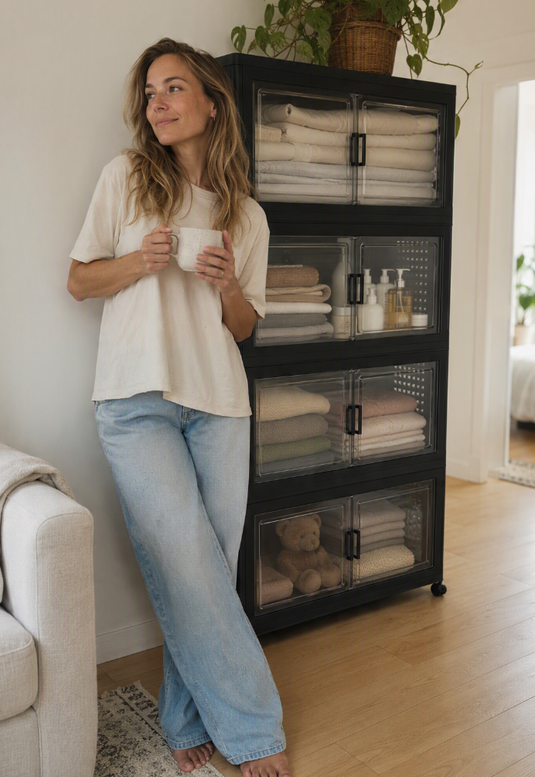
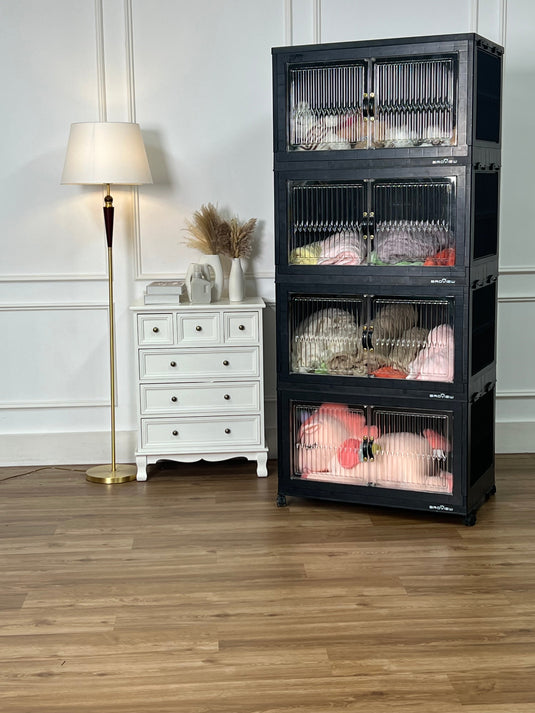
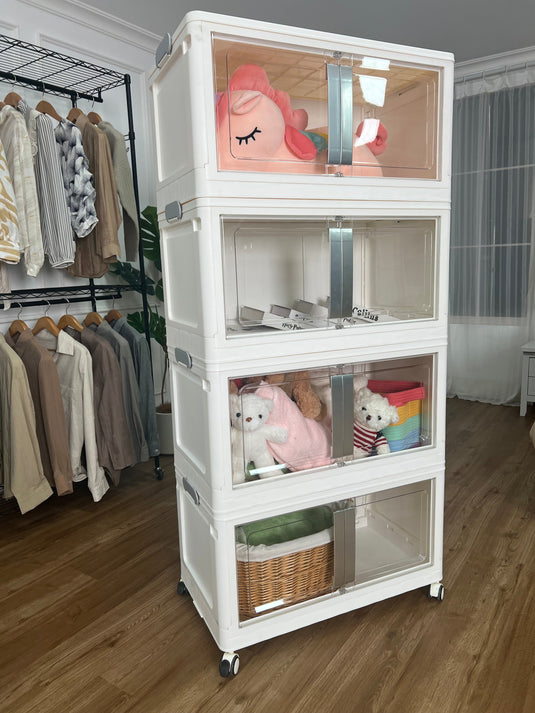
Successfully organizing shoes in a small bedroom entryway requires dedicated containment. Rather than leaving them in a chaotic pile, use drop-front shoe boxes. These specialized boxes feature a transparent door on the front, allowing you to access your shoes without having to unstack the boxes above them.
You can stack these tightly against the wall right next to your bedroom door or tuck them beneath your freestanding wardrobe rack. This keeps your shoes separated, dust-free, and visually organized, proving that practical containment is one of the most vital strategies for maintaining your sanity in a tight space.
7. Maximize the Top Tier and Protect Soft Goods
If you are lucky enough to have a small closet, you must ensure you are using every single cubic inch of it—especially the hard-to-reach area above the hanging rod.
Maximizing overhead closet space with labeled totes is the best way to utilize this high altitude. Because this area requires a step stool to access, it should be reserved for items you rarely need, such as sentimental keepsakes, out-of-season accessories, or extra guest pillows. By using uniform totes and investing in a good label maker, you will never have to guess what is stored in the high corners of your closet.
Furthermore, when dealing with soft goods like extra pillowcases, duvet covers, or bath sheets, you want to avoid airtight plastic that can trap moisture and cause a musty odor. Instead, opt for breathable fabric bins for linens and towels. Fabric bins allow air circulation, keeping your freshly laundered linens smelling crisp and clean until you are ready to use them. Place these breathable bins on the very top shelf of your closet or atop a tall modular corner unit.
Integrating Your New Organization Systems
Reading about these solutions is the first step, but putting them into practice requires a bit of planning. To successfully transition your room from cluttered to calm, follow this implementation checklist:
-
Measure Everything Twice: Never buy a storage box without measuring the space where it will live. Measure the depth of your shelves, the height under your bed, and the width of your room's corners.
-
Stick to a Color Palette: In a small space, visual noise can be just as overwhelming as physical clutter. When buying aesthetic decorative boxes or fabric bins, stick to neutral tones or a cohesive color palette that matches your room's decor.
-
Label Strategically: While clear containers do not necessarily need labels, opaque boxes absolutely do. A neatly printed label prevents you from tearing apart your meticulously organized space just to find a single scarf.
-
Practice the "One In, One Out" Rule: To maintain your newly organized minimalist bedroom, commit to letting go of an old item every time you bring a new one into the space. This guarantees your storage boxes will never overflow.
Conclusion
Living in a compact space does not mean you have to sacrifice comfort or style. By shifting your perspective and viewing your room as a three-dimensional puzzle, you can unlock storage potential you never knew existed.
From utilizing the hidden depths beneath your mattress to building upward with elegant shelving, the right containers are the secret weapon to an orderly home. Whether you are dealing with the challenge of a room without a closet, figuring out the best way to safely stow away bulky winter coats, or simply trying to stop tripping over your favorite shoes, structured containment provides the answer.
By applying these strategies, you can easily answer the question of How to Maximize Small Bedroom Space: 7 Clutter-Free Storage Box Ideas. You will transform your cramped, chaotic sleeping quarters into a streamlined, peaceful haven where everything has its rightful place, allowing you to finally breathe easy and rest well.