We’ve all been there: staring at a mountain of cardboard boxes in the garage, knowing the exact item you need is trapped at the very bottom. Playing this real-life Jenga game is frustrating, especially since cardboard naturally weakens and crushes under pressure over time. Common knowledge among professional organizers dictates that this precarious setup is a leading cause of frustrating storage avalanches. For anyone tired of this balancing act, understanding the benefits of stackable storage bins is the first step toward reclaiming your sanity and your floor.
Look just above those collapsing boxes and you will discover your home's greatest hidden asset: vertical space. Instead of losing precious square footage to sprawling piles, effective decluttering solutions utilize the empty air reaching up to your ceiling. Think of this approach like building an apartment complex for your belongings; stacking sturdy plastic containers minimizes the footprint—the actual floor space a bin takes up—while maximizing storage capacity. Studies in environmental psychology show that reducing this physical spread immediately lowers our daily stress levels.
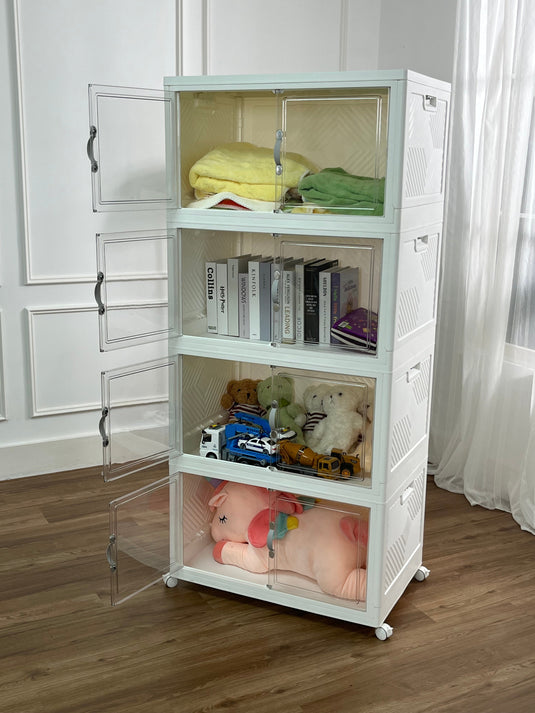
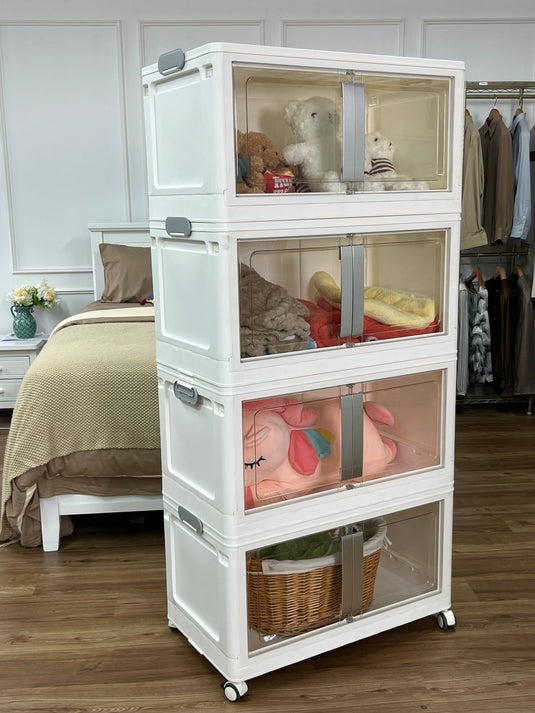
Visualizing the transformation from a cluttered floor to a neatly stacked column of air changes how you view home organization entirely. Trading unpredictable cardboard for rigid, interlocking containers eliminates the fear of a tumbling mess while dramatically opening up your walkways. Suddenly, that overwhelming guest room feels like a breathable space again, which means you can finally invite friends over without apologizing for the mess.

Trading Your Floor for the Sky: Maximizing Vertical Storage Space
Does your guest room feel like a sprawling storage unit? Most of us spread our belongings across the floor, rapidly eating up valuable square footage. By maximizing vertical storage space, you can start treating your home like a 3D environment rather than a flat map.
Think of a single plastic bin as a one-story house. The floor space it covers is its "footprint." Now, imagine building an apartment building for your winter clothes. Stacking five identical bins upward multiplies your holding capacity by five, all while consuming the exact same footprint.
This footprint-to-volume ratio works wonders for small space organization. If four scattered boxes currently consume your closet floor, stacking them safely reclaims three entire spots. You suddenly have room to park your vacuum cleaner just by claiming the empty air above your seasonal sweaters.
Clever storage solutions that build up rather than out are the quickest way to make rooms feel twice as large. However, towering bins mean you need a fast way to know exactly what lives on each level. That introduces a crucial decision about your visual inventory: knowing when to let yourself see inside your stacks.
The Transparency Trade-off: When to Choose Clear vs. Opaque Containers
How much time did you spend hunting for the scotch tape last Christmas? Choosing transparent vs opaque storage containers completely changes how you interact with your belongings. Clear bins create a "visual inventory"—a simple way for your brain to scan a room and pinpoint exactly what you need without popping a single lid. By letting your eyes do the heavy lifting, you can easily cut your search time in half.
But transparency isn't always the goal when decluttering shared spaces. Seeing every single item inside a stacked box creates "visual noise," which is just a helpful term for a room feeling chaotic even when it’s technically organized. If you are storing tangled electronics cords or mismatched pet toys on a visible living room shelf, opaque bins are your best friend. They hide the mess and instantly make the room feel calmer.
To decide what works best for your home, use this quick-check rule:
-
Use clear bins for: Deep storage (garages, closets) where fast identification matters more than aesthetics.
-
Use opaque bins for: High-traffic areas (living rooms, bedrooms) where you need to hide messy-looking items and reduce visual noise.

Once you have picked the right style, ensuring those towering bins stay standing becomes the priority.
The Safety of the Stack: Why Interlocking Lids Beat 'Tetris' Stacking
Playing a risky game of storage "Tetris" by carefully balancing flat boxes works temporarily, but smooth lids allow "lateral shifting"—meaning your boxes can easily slide side-to-side. When stacking heavy containers made of durable plastic, even a slight nudge can cause a dangerous avalanche.
To stop these spills, you need bins that actively grip each other to create interlocking stability. The best options use a "ridge-and-groove" system where a bin's bottom drops perfectly into the recessed lid below it. Because container shapes vary wildly by company, mixing brands immediately ruins this secure fit. Sticking to one matching system makes your stack act like a solid piece of furniture rather than a fragile tower.
When shopping, look for these key features of a stable lid design:
-
Deep channels: Seek an interlocking lid design for stability that tightly hugs the base of the bin above it.
-
Structural strength: Follow manufacturer weight guidelines for preventing tip-over hazards as your towers grow taller.
-
Uniformity: Buy identical brands so the ridges always align perfectly.
Once your stacks are safely locked together, you can maximize the most awkward home areas, like small closets.
Small Closets, Big Ideas: Organizing Tight Spaces Without Expensive Shelves
Staring at the empty wall beneath your short hanging clothes can be incredibly frustrating. That "dead space" begs to be used, but installing permanent wooden shelves isn't always an option, especially for renters avoiding wall damage. Figuring out how to organize small closets efficiently usually comes down to maximizing this overlooked floor area without picking up a drill.
Think of stackable plastic bins as sturdy building blocks for your home. This approach creates modular home organization systems—essentially, a custom layout you can easily stack and rearrange. By treating your containers like temporary shelving, you can build a stable tower of folded jeans or seasonal sweaters straight up to the hem of your hanging shirts.
The real magic of this setup is its absolute flexibility. When your routines shift, your storage adapts instantly; a wide row of low bins holding baby clothes can be quickly restacked into a narrow corner tower for toddler toys. These space-saving ideas grow alongside your family without requiring a single tool or expensive renovation.

Once your closet layout is perfectly arranged, long-term preservation is the next priority. The right containers act as a fortress against the elements.
Heavy-Duty Protection: Keeping Dust, Pests, and Humidity at Bay
Discovering a musty smell or moth damage on a favorite winter sweater stored on an open basement shelf is a common frustration. While open shelves are great for quick access inside, they leave your valuables completely exposed to dust, pests, and damp air. Swapping open racks for heavy-duty garage storage bins with lids turns a vulnerable pile of belongings into a protected fortress. By locking out the elements, you instantly extend the life of your seasonal items and expensive tools.
Not all containers offer the same defense. If you are organizing a damp space, standard lids will not cut it. You need a specific upgrade: a gasket seal. Think of this like the rubber lining on your refrigerator door. It creates an airtight, bug-proof barrier. When combined with durable plastic, these weather-resistant outdoor storage containers ensure your family's holiday decorations or metal hand tools stay perfectly dry and rust-free.
Before you buy, check your boxes against this quick survival list for tough spaces:
-
Gasket-sealed edges: To block damaging humidity.
-
Reinforced corners: To prevent cracking under heavy weight.
-
Locking latches: To keep curious pests out.
Once items are packed safely inside these shields, they must be stacked securely using proper weight distribution.
Master the 'Pyramid Rule' for Safety and Accessibility
Watching an entire column sway after pulling a box from a tall stack is terrifying. That wobble happens when we ignore a basic center of gravity. Keeping the bulk of the mass close to the floor anchors your boxes and prevents a dangerous avalanche.
To eliminate this risk, apply the "Pyramid Rule" to your setup. This strategy requires treating your heaviest boxes—like those holding dense metal tools—as an immovable foundation. Building upward with progressively lighter items ensures proper weight distribution, so your bottom lids never crack under crushing pressure.
Thoughtful organization also changes how comfortably you interact with your belongings. Following storage best practices, position the items you grab frequently right around chest level. When you choose boxes featuring ergonomic handles for easy transport, sliding out that mid-level bin becomes effortless on your back and shoulders.
With this smart layout, you rarely have to unstack five heavy layers just to reach a single roll of packing tape. These structural ideas work beautifully far beyond the garage or basement walls, translating perfectly into pantry organization.
Pantry Perfection: Creating a Modular System for Household Essentials
Accidental "double buying" happens when groceries get buried out of sight in deep cabinets. By bringing modular home organization systems into your kitchen, you transform a dark shelf into a clear visual inventory. Stacking transparent bins lets you capture unused vertical space, creating a highly visible home for small, easily lost items like spice packets or canned goods.
To eliminate food waste, borrow a simple grocery store strategy called "First-In, First-Out" (FIFO). When unloading new groceries, place fresh items at the back of your stackable bins and slide the older items forward. This guarantees you consume existing food before it expires. Certain household essentials are exceptionally suited for this stacking method:
-
Dry baking goods: Bags of flour, sugar, and specialty grains.
-
Grab-and-go snacks: Granola bars, fruit pouches, and trail mix.
-
Canned essentials: Beans, tomatoes, and soups, stacked to prevent rolling.
Embracing these space-saving pantry organization ideas makes daily meal prep effortless and stops unnecessary spending. Decluttering your food storage ensures you only buy what you truly need. However, keeping this beautiful new setup intact requires family maintenance, which relies heavily on intuitive labeling.
Beyond the Bin: Labeling and Categorization for Long-Term Success
Putting everything in a neat bin is only half the battle if you still open five lids to find the tape. You need "intuitive retrieval"—making it so obvious where things live that your brain barely has to work. Following the best practices for labeling storage containers ensures this habit sticks. Whether using a digital printer, chalk markers, or masking tape, always define a permanent home for every item.
Maintaining this space means speaking your family's language. For kids who cannot read yet, visual cues are a lifesaver. Try implementing color-coded categorization for toy storage, assigning blue bins for blocks and green for art supplies. When you treat clean-up like a simple matching game, children easily figure out where things belong without constantly asking for your help.
A well-labeled room transforms a cluttered house into a smoothly running machine. Because every item now has an unmistakable address, putting things away becomes second nature. Instead of feeling frustrated by missing tools, you simply reclaim your free time.
Your Weekend Action Plan: From Chaos to Categorized
You no longer have to play a frustrating game of cardboard Jenga to reach your seasonal items. By choosing the right storage solutions—focusing on sturdy lids, uniform sizes, and transparency—you can instantly reclaim your vertical space. Execute this simple decluttering session this weekend to maximize the benefits of stackable bins:
-
Measure: Check your ceiling height and floor footprint before buying.
-
Categorize: Group items by weight, keeping the heaviest gear as your foundation.
-
Stack: Build your tower and maintain the system with a five-minute monthly "stack check."
Implementing these decluttering solutions means you can actually park your car in the garage again or spot your favorite shoes in five seconds flat. Stop letting clutter steal your limited floor space, start looking up, and embrace the power of the stack.